
Last updated November 23, 2026
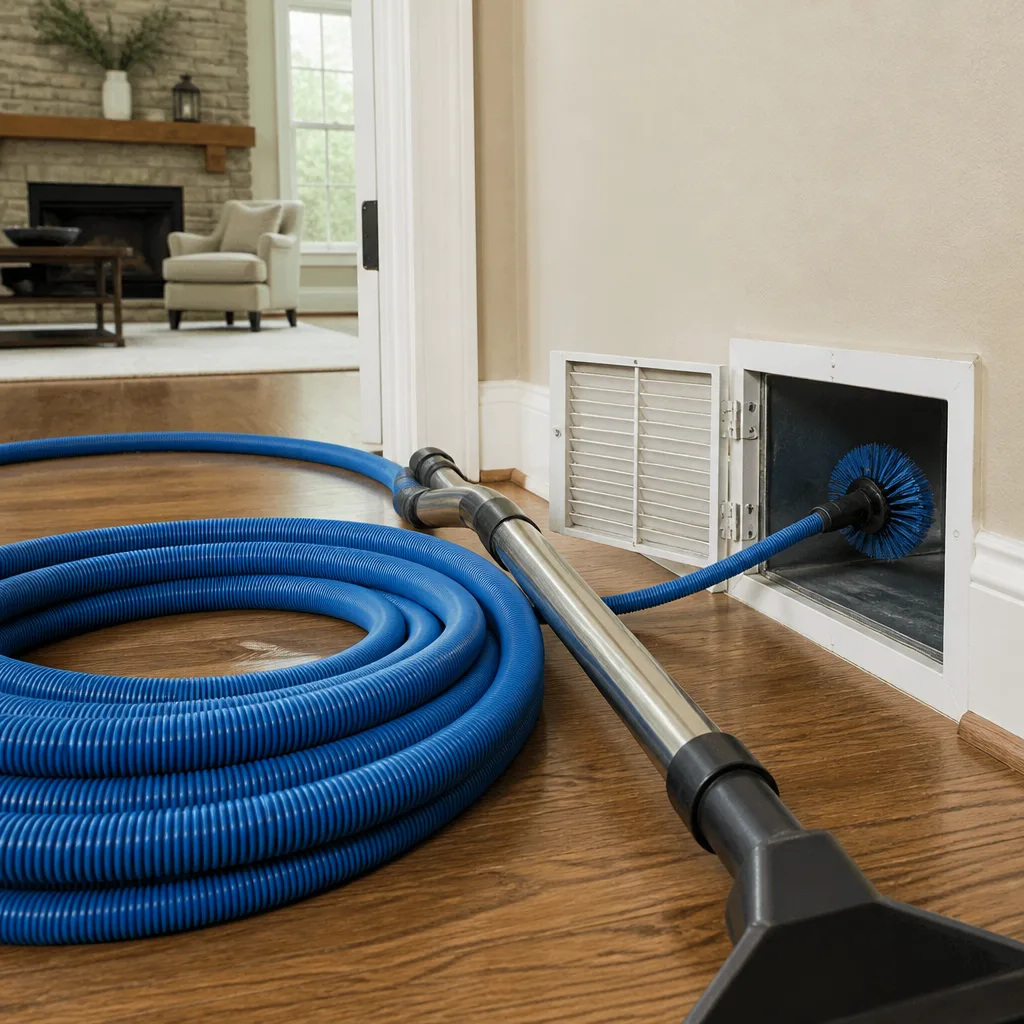 Whole-home duct cleaning
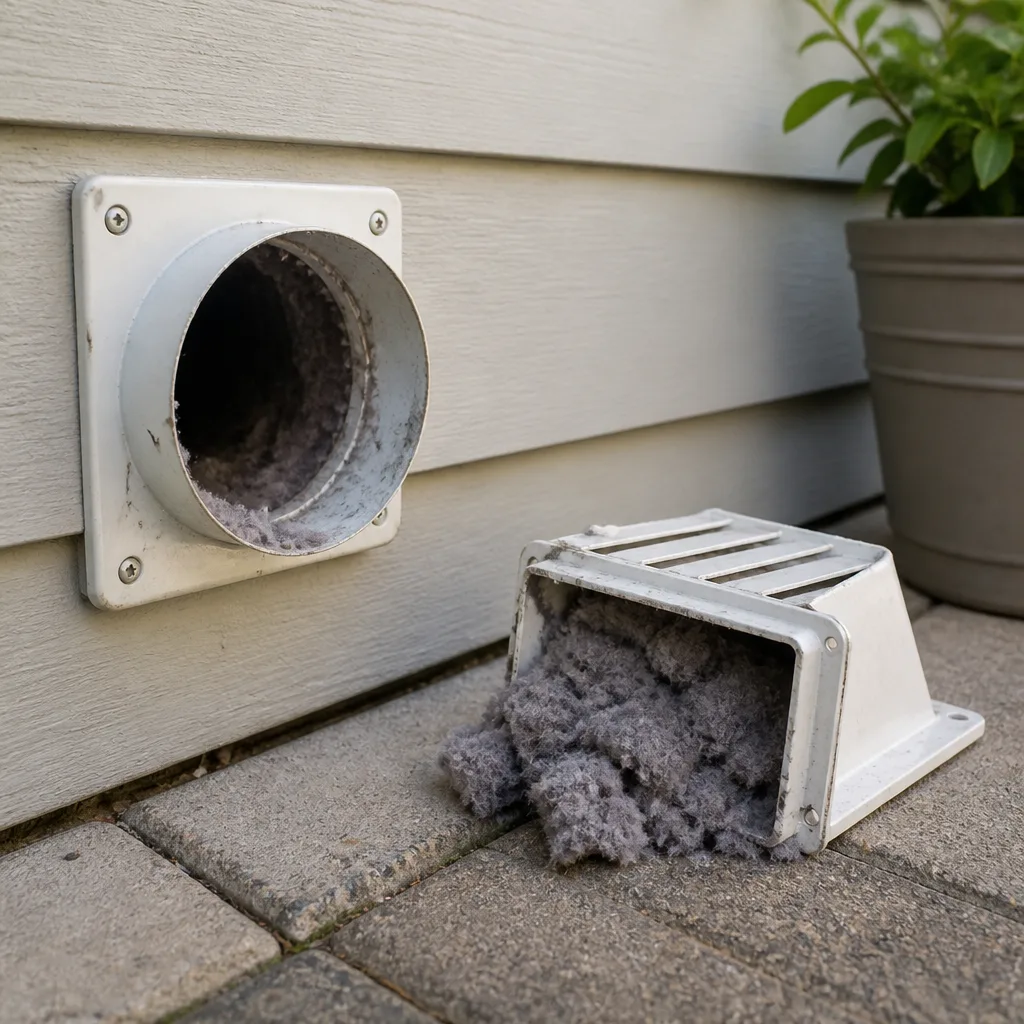 Dryer vent cleaning
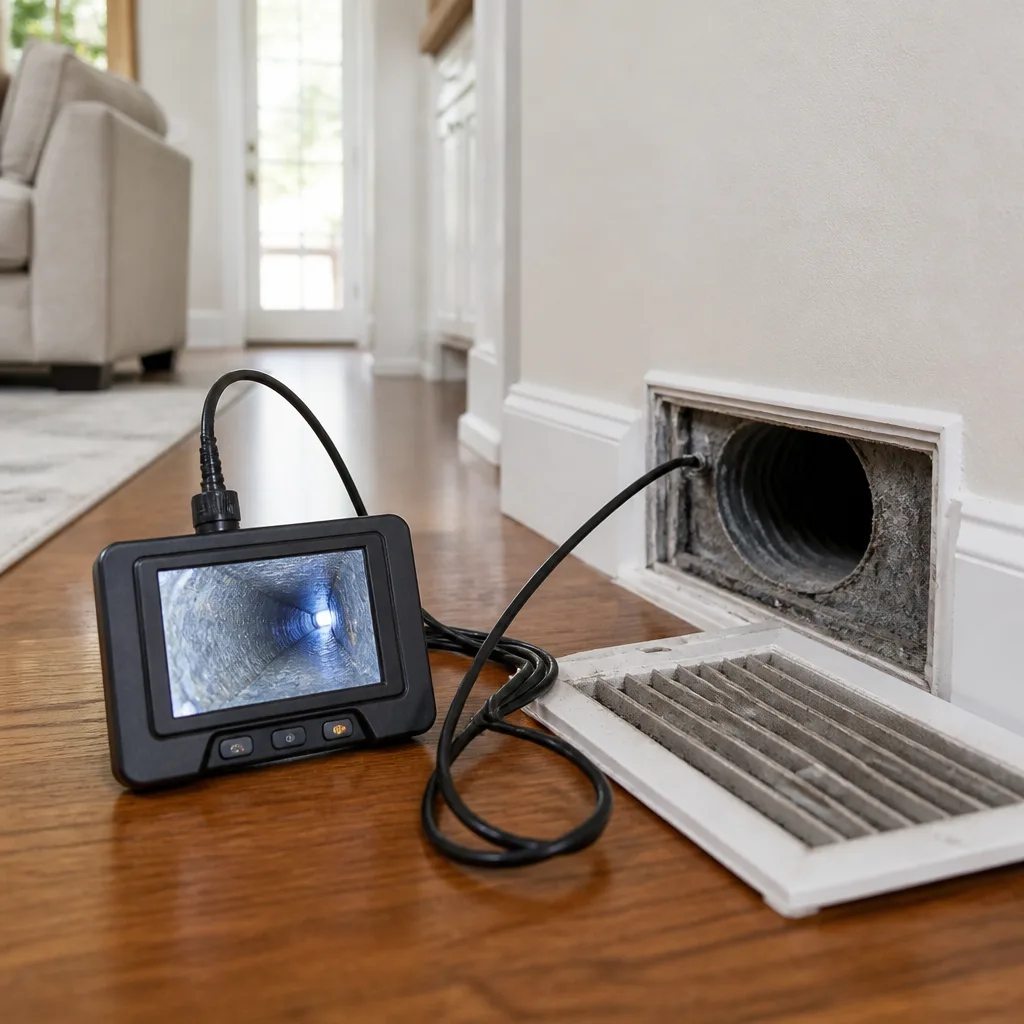 Camera inspection
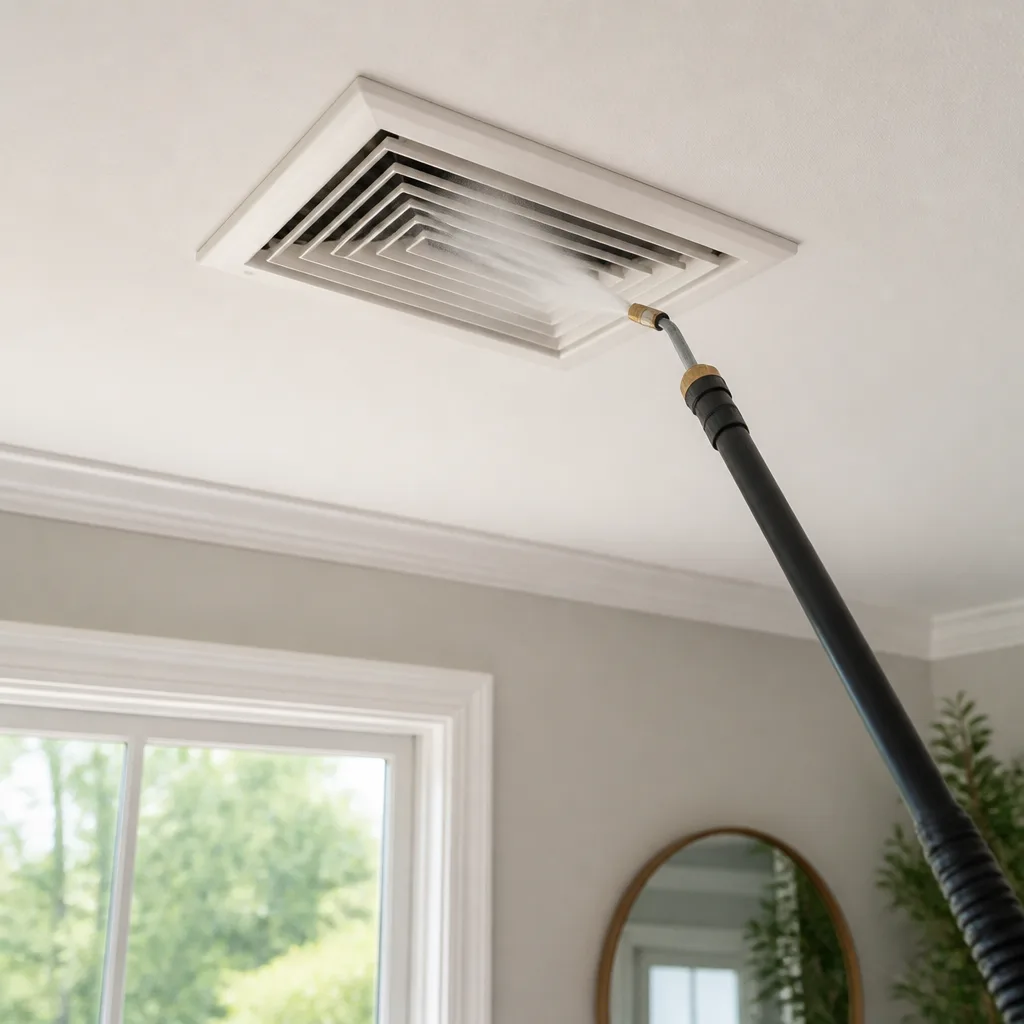 Sanitizing & deodorizing
Whole-system duct and dryer vent check with before-and-after photos - you see exactly what came out of your vents
That "$99 whole-house special" is a bait ad - the real number appears once they are in your hallway, or the "clean" is a shop-vac at the register. We photograph the inside of your ducts before and after instead.
Air Duct Cleaning Maintenance Checklist for North Dallas Homeowners
Changing your air filter on schedule is not duct maintenance. It is the minimum condition required for duct maintenance to mean anything at all. A clogged filter stops sealing against its frame the way it should, so air slips around the edges and carries a season’s worth of particles straight past the filter and onto your evaporator coil and duct liner. In a North Dallas summer, with the system running nearly nonstop from May through September, that bypass happens fast. What follows is the same inspection sequence our technicians use to decide whether a system needs a light cleaning, minor maintenance, or full remediation, translated into tasks you can do yourself. North Dallas homeowners should leave this guide knowing exactly what to look at, how often, and when it is time to call.
Quick Answer
Check your filter seal, return grilles, and any accessible flex duct monthly; inspect for pollen and storm-related seam damage quarterly; and book a professional cleaning and inspection once a year. North Dallas homes should document the inside of a supply register with a phone camera before and after each check so you have a baseline. Anything that smells musty, shows dark staining, or involves a disconnected duct in the attic needs a technician, not a homeowner with a shop vacuum.
Styles & brands we work with
- Whole-home duct cleaning
- Dryer vent cleaning
- Camera inspection
- Sanitizing & deodorizing
Table of Contents
- The Monthly Inspection Sequence
- Quarterly Checks Built for North Dallas Conditions
- How to Document the First 12 Inches Inside a Supply Register
- Annual Tasks: What You Can Do vs. What Needs a Technician
- Building a Maintenance Log That Protects You
- Why Equipment Grade Matters More Than Coupon Price
- The Dryer Vent Deserves Its Own Checklist
- Common Mistakes to Avoid
The Monthly Inspection Sequence
Ten minutes once a month catches most of what goes wrong with a residential duct system in North Dallas. You are not cleaning anything on this pass. You are looking for the three failures that quietly undo a filter change: gaps in the filter seal, debris loading on the return side, and flex duct that has sagged or come loose in an accessible attic section.
Work through it in this order:
- Filter bypass gaps. Pull the filter and look at the slot it sits in. Run a finger along all four edges of the frame. If you can feel air moving past the filter at the edge, the filter is bypassing. A strip of foam weatherstripping along the frame is the usual fix, and it costs a few dollars.
- Return grille debris load. Remove the return grille and look at the filter face and the metal behind it. Fuzz, pet hair, and a gray mat of dust mean the return is doing its job collecting, but it also means you should check one supply register downstream to confirm the air arriving there is clean.
- Flex duct sag and disconnection in accessible attic sections. Take a flashlight into the attic and walk the runs you can see. A flex duct that sags more than a shallow belly, or any run pulled loose from a collar or boot, is a problem. A disconnected duct dumps conditioned air into the attic and pulls attic air into the house.
Write down what you find each month. A record of the same bypass gap appearing three months running is the kind of pattern that tells a technician the filter housing itself is the problem, not the filter.
Quarterly Checks Built for North Dallas Conditions
North Dallas sits in a stretch of climate that loads ductwork on a schedule the rest of the country does not share. Cedar and oak pollen come in heavy through late winter and spring, and the system pulls all of it through the return side. Summer storms roll through with enough pressure change to work on weak seams. A monthly pass will not catch either of these; a quarterly one will.
After pollen season
Once the spring pollen load drops, pull a return grille and look at what is stuck to the filter and the duct wall behind it. Cedar pollen is fine and sticky, and it clings to duct liner in a way ordinary household dust does not. If the filter face is coated and the inside of the return plenum shows a yellow-green film, that film is heading for your coil. Change the filter, then check one supply register with your phone camera (see the next section) to see whether any of it got past the filter.
After a storm system passes
Pressure changes across a storm front push on duct board seams and flex duct joints. Walk the accessible attic runs after a big storm and look for tape lifting off seams, gaps at collars, and any run that has shifted. Duct board seams that crack open can pull attic air, insulation fibers, and whatever else is up there into the supply side. If you see a lifted seam, do not tape it yourself and forget it; note it and get it sealed properly, because a failed seam comes back.
Quarterly is also when you re-check the filter seal from the monthly pass. Weatherstripping compresses and shifts over a season.
How to Document the First 12 Inches Inside a Supply Register
A flashlight and a phone camera are enough to see the most important 12 inches of your duct system. This is the section right behind the register, and what you find there tells you more about system condition than anything visible from the room.
- Remove the supply register and set it aside.
- Shine the flashlight straight in and take a wide photo with the flash on. Hold the phone steady; low light makes the shot blurry.
- Take a second, closer photo angled toward the duct wall, not straight down the run.
- Label both photos with the month and the register location.
Now read what you photographed. Light gray dust that wipes off easily is ordinary particulate buildup and usually tracks back to filter performance. Dark spotting, a mottled patchy film, or anything that looks like staining rather than dust suggests moisture has been present, and that is a different problem. You cannot diagnose biological growth from a phone photo, but you can tell a technician exactly what you saw and when you first saw it. Texture matters too. Fuzz and lint point to fiber shedding; a fine uniform coating points to fine particulate that got past the filter.
Keep the earliest set of photos. In a year, the comparison is your baseline, and any contractor who wants to sell you a remediation can show you the difference on your own duct, not on a stock photo.
Annual Tasks: What You Can Do vs. What Needs a Technician
Some annual duct maintenance is well within homeowner reach. Some is not, and the line between the two is drawn around anything that involves opening the system, working inside it, or evaluating the coil and liner. Here is how the split runs.
You can do these with a basic inspection kit
- Change the filter and check the seal gap along all four frame edges.
- Remove and photograph return grilles once a year to track debris load.
- Document the first 12 inches inside every supply register you can reach.
- Walk accessible attic runs and note sag, disconnection, or lifted tape.
- Vacuum the register faces and the grille outside faces with a brush attachment.
A flashlight, a screwdriver, a roll of foam weatherstripping, and your phone covers every one of these.
These need a professional
- Cleaning the interior of the duct runs, the plenum, and the coil.
- Sanitizing a system after visible biological growth or odor.
- Sealing a failed seam, collar, or boot with a proper mastic or the right tape.
- Reconnecting a duct that has pulled loose in the attic.
- Assessing whether buildup on the evaporator coil is significant enough to justify a cleaning visit.
That second list is where the contractor-grade equipment matters. A rotary-brush system such as the Rotobrush and an HVAC-extraction setup from Nikro are built to loosen and capture what clings to the duct wall. A shop vacuum pulled up to a register cannot reach the run, cannot contain what it disturbs, and cannot create negative pressure. When a technician arrives with an air duct cleaning rig built for remediation work, the difference shows in what comes out of your system and what stays inside it. Our technicians have up to 10 years of experience, and they see the North Dallas variables (pollen loads, long cooling seasons, storm-season seam failures) on nearly every job.
Building a Maintenance Log That Protects You
A written maintenance log does two things. It gives any future technician a baseline for your specific system, and it protects you from the most common duct-cleaning upsell: a claim that conditions inside your duct are worse than they are. A dated log of your own photos and notes makes that claim easy to check.
Keep the log simple. A folder on your phone and a paper sheet in the HVAC closet both work. What belongs in it:
- The date and result of every monthly and quarterly inspection.
- Photos of the first 12 inches inside each supply register, labeled by register and month.
- The filter brand, size, and change date every time you swap one.
- Any technician visit, what was done, and what was found.
- Photos of any attic run that showed sag or disconnection, before and after the fix.
When a contractor arrives, show them the log. If they tell you the system has a problem you documented as clean last month, that is a conversation worth having. If they show you a clean HVAC cleaning result and photograph what they found, add it to the log.
Why Equipment Grade Matters More Than Coupon Price
The biggest variable in a duct cleaning quote is not price. It is what the crew brings through the door. Two companies can quote the same job and arrive with rigs that do completely different things, and the invoice will not tell you which one showed up.
Professional remediation work runs on two things: a rotary-brush or air-driven tool that can mechanically loosen buildup from the duct wall, and negative-pressure containment that keeps the loosened material from drifting into your living space. The equipment we bring to North Dallas properties includes Rotobrush rotary-brush systems on every duct cleaning job, Nikro HVAC extraction equipment, and Abatement Technologies negative-air and filtration units for containment during service. For air quality and sanitizing, our finishing steps use Guardsman-grade protective products, and we partner with Honeywell and Aprilaire on whole-home filtration upgrades at the point of service. That last piece matters for a system that keeps loading up on pollen: filtration upgrades installed at the air handler change what reaches the duct in the first place.
When you get a quote from any company, ask two questions. What brush or extraction system will you use, and how are you containing the dust while you work? A crew that cannot answer both clearly is a crew that will leave your registers and your furniture dusty and your duct wall unchanged. See the before-and-after on the work, and ask to see it on your own system, photographed during the job.
The Dryer Vent Deserves Its Own Checklist
Most duct-cleaning checklists treat the dryer vent as an afterthought. It should not be. The dryer vent is a separate pathway carrying hot, lint-laden air, and a blocked vent is a fire risk in a way a dirty supply duct is not. A duct-only company that offers dryer vent cleaning as an add-on is missing the point.
Add these to your maintenance log:
- Every few loads: clean the lint screen.
- Monthly: check the exterior vent flap and make sure it opens fully when the dryer runs. A flap that stays shut or flaps weakly suggests lint buildup in the run.
- Quarterly: pull the dryer out far enough to see the back connection and check for lint accumulation around the collar.
- Annually: have the full vent run cleaned and inspected, especially if the dryer takes longer than it used to or the laundry room feels more humid than it should.
Dedicated dryer vent cleaning is its own service for a reason. The equipment and method are different from duct cleaning, and the risk you are managing is different. Treat it as its own line in the log.
Common Mistakes to Avoid
- Assuming a filter change is the whole job. A filter change is the baseline. If the filter frame leaks around the edges, the change buys you less than it should.
- Taping over a failed seam. A lifted duct board seam has to be properly sealed. Tape laid over a dirty seam comes up in a season, and the leak pulls attic air into the supply side.
- Trusting a coupon price to mean a full-system clean. Whole-system pricing for a North Dallas home typically falls in a wide range depending on duct count and access, and a very low headline number usually represents a partial clean or per-vent billing. Get a written estimate before any work begins.
- Ignoring the first register after pollen season. North Dallas sees heavy cedar and oak loads. If you do not check the first 12 inches of a supply register after the spring, you will not know whether particulate got past the filter.
- Skipping the attic walk after a storm front. Pressure changes work on weak seams. A quick quarterly look in the attic catches what a monthly room check cannot.
- Assuming biological growth from a phone photo. A camera cannot diagnose a biological issue. If you see dark staining or smell anything musty, that is a technician conversation, not a DIY decision.
- Hiring a company that cannot show you the work. Ask for before-and-after photos of your own system. A company that only shows you a marketing image is showing you a marketing image.
See the difference
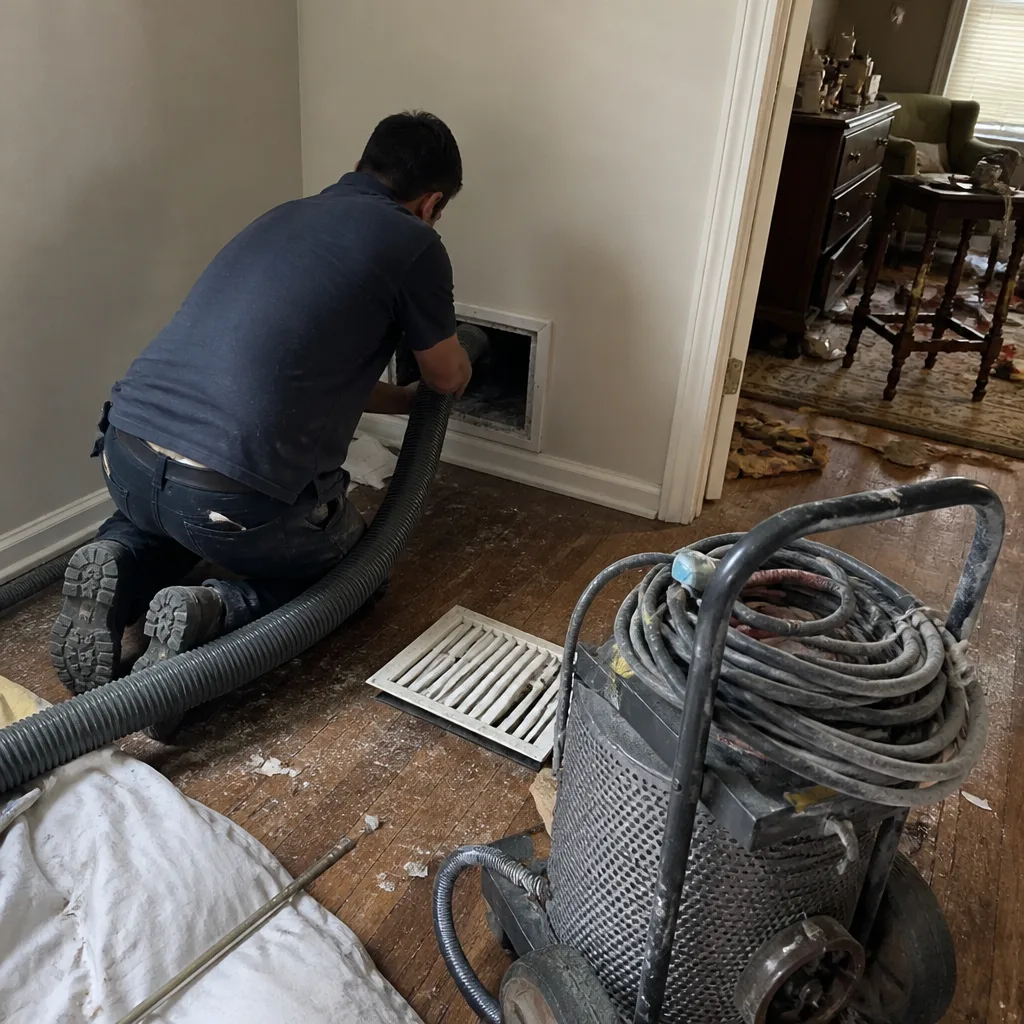 Before
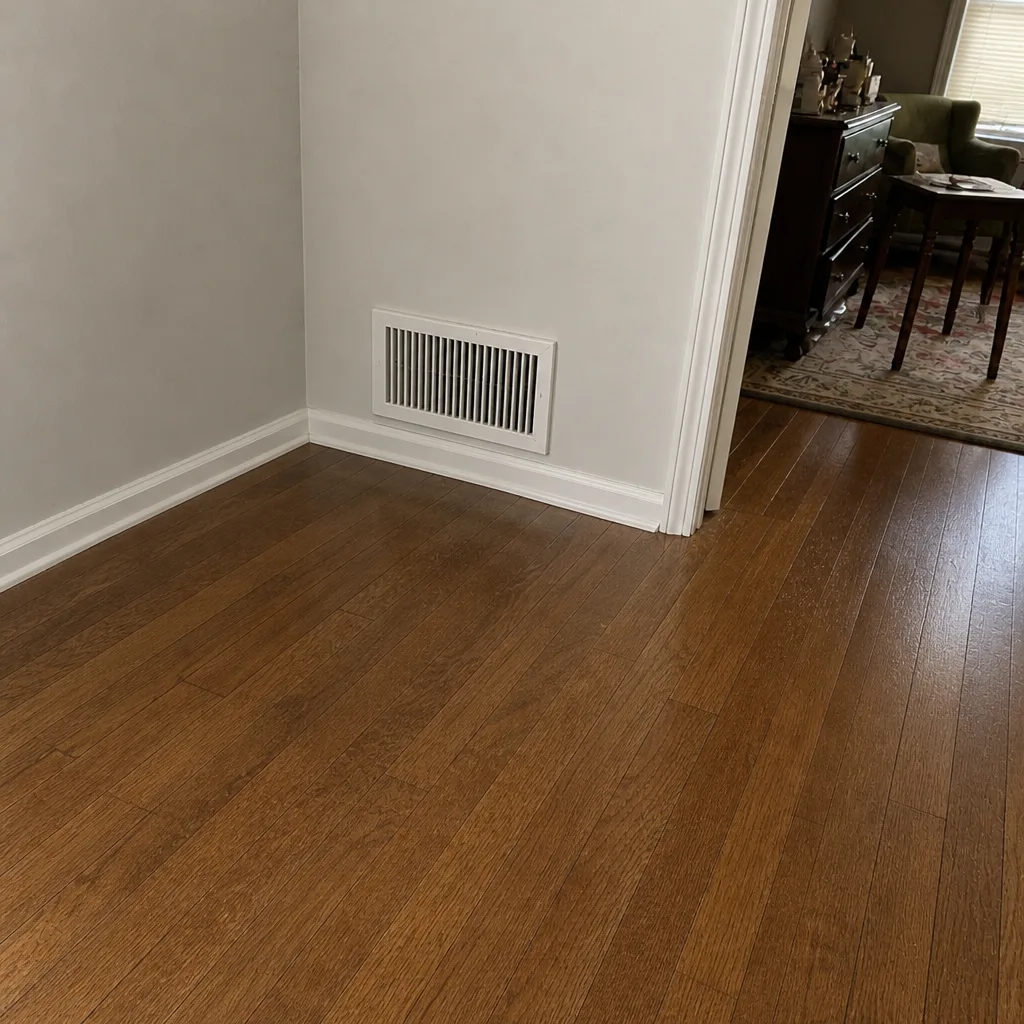 After
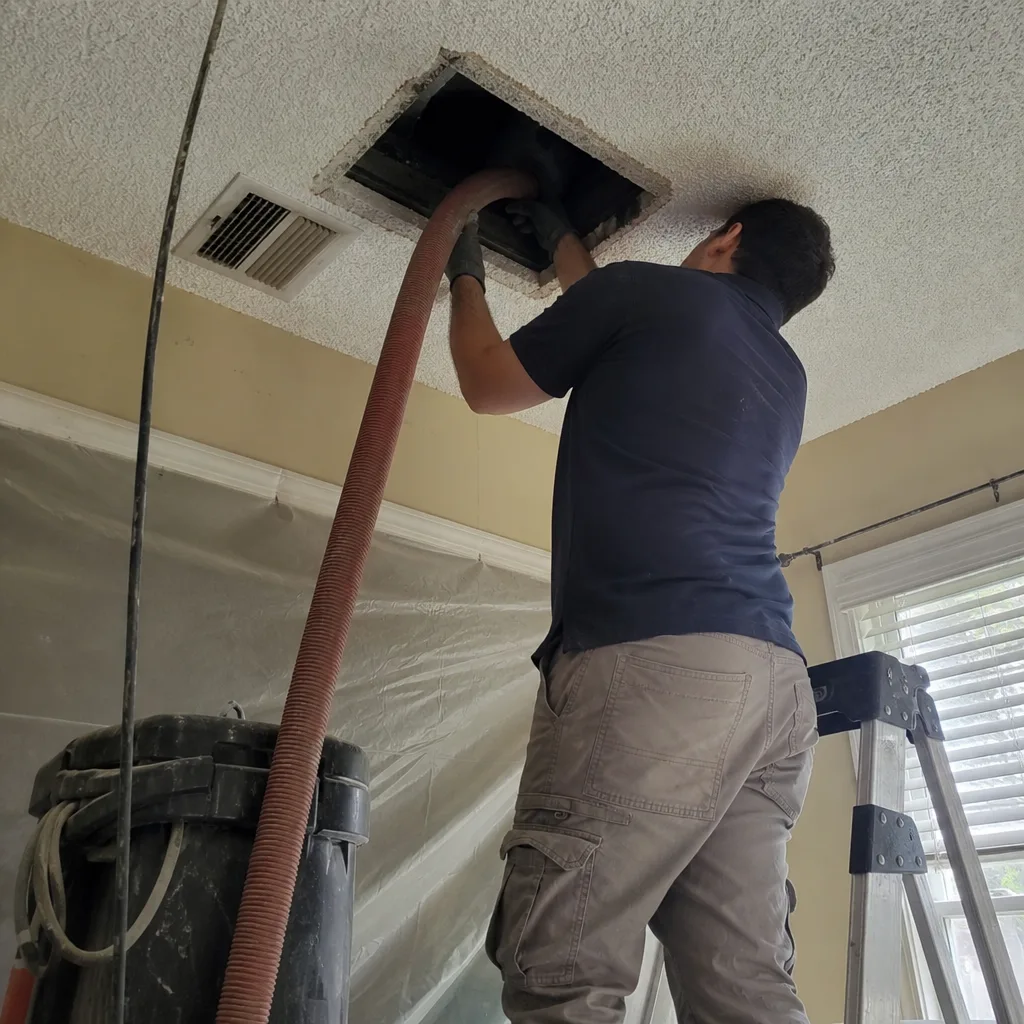 Before
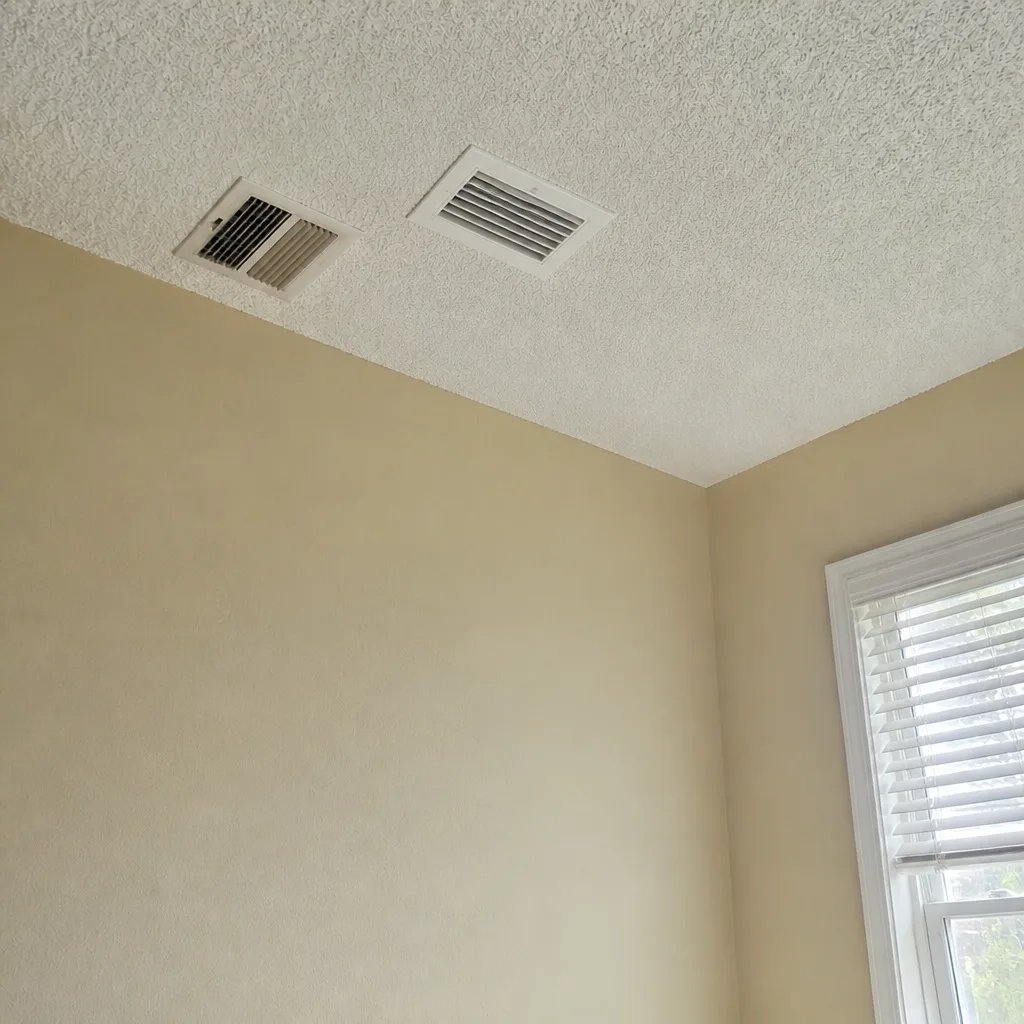 After
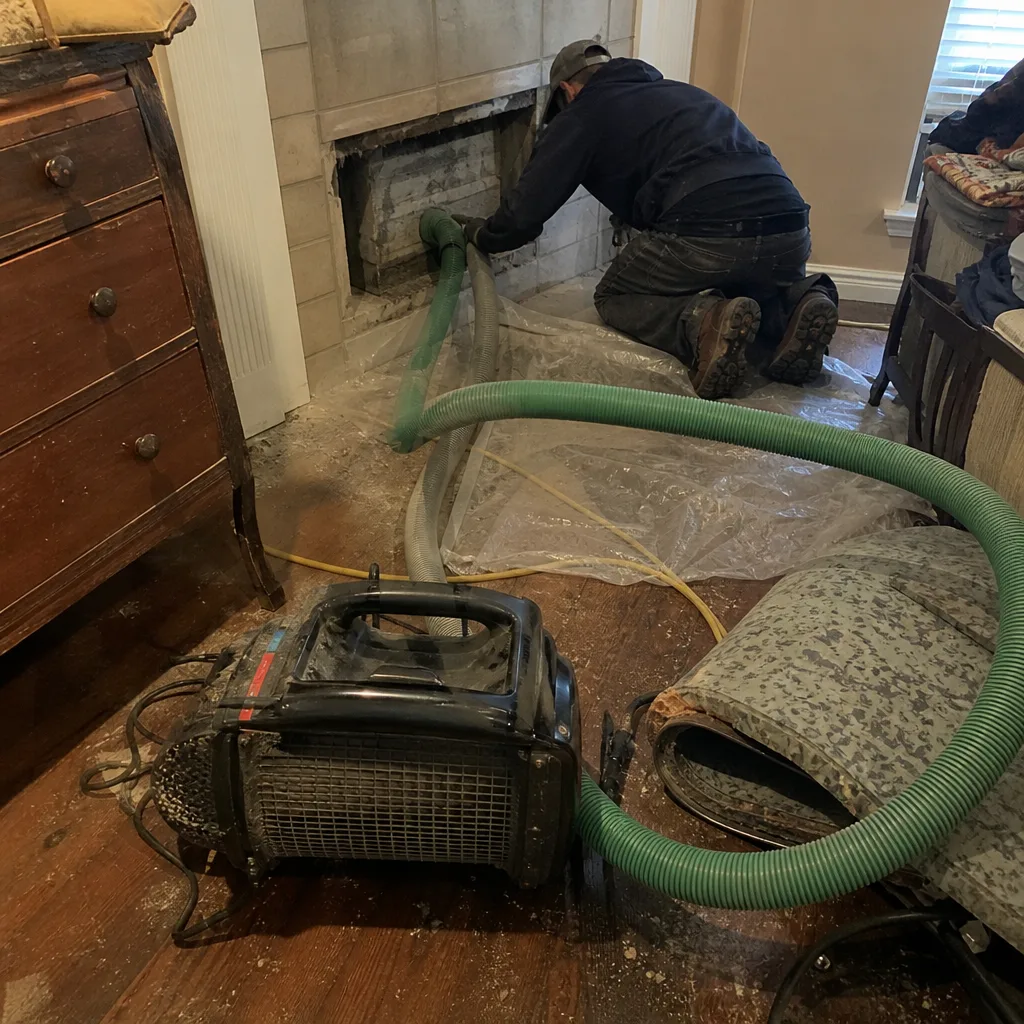 Before
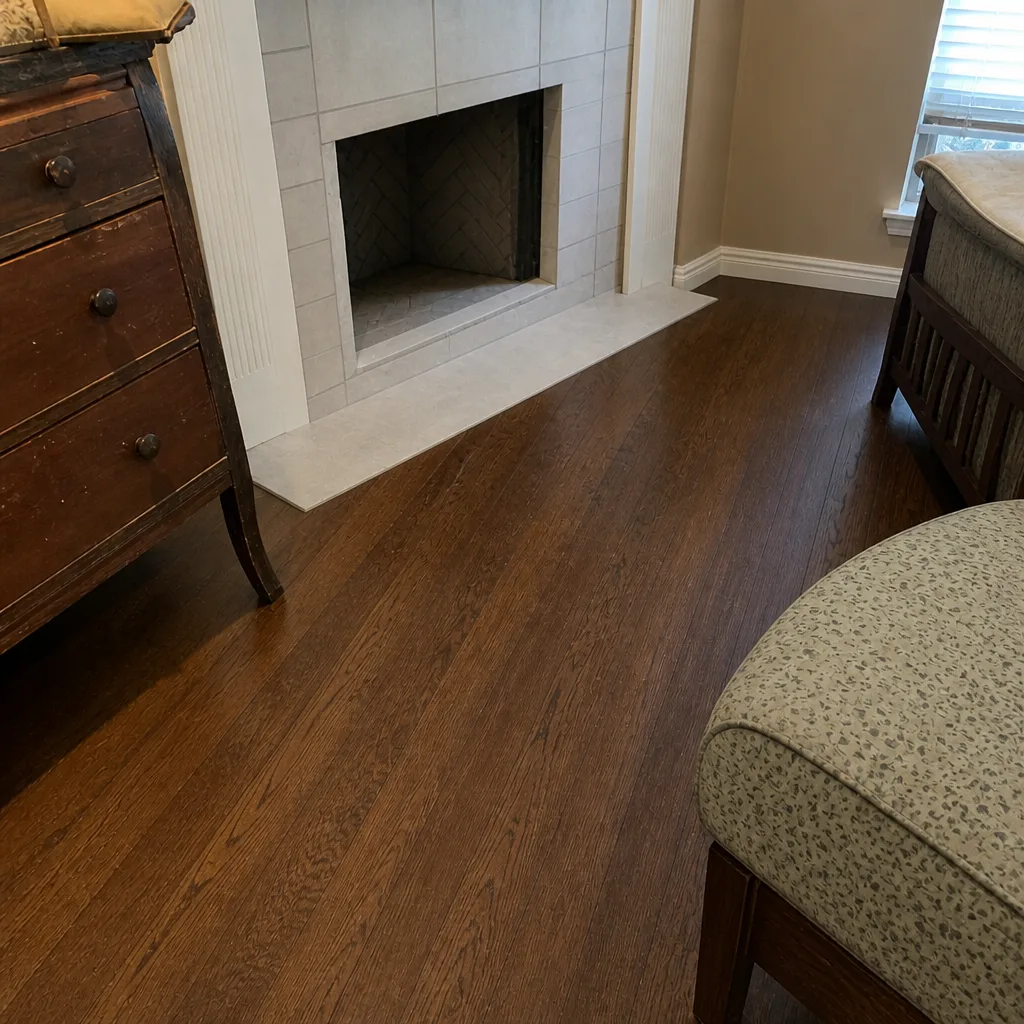 After
When to Call a Professional
Call a professional when your own inspection turns up any of these: a musty or stale smell that follows the air, dark staining on duct walls or the coil area, a flex duct that has pulled loose or a seam that has cracked open in the attic, visible buildup on the evaporator coil, or an annual inspection that has been skipped because the system has been running hard through a North Dallas summer. Call if your allergies have worsened without a clear cause. Call if you have had renovation work and the system pulled drywall dust. A light cleaning, sanitizing, or duct sealing is a scheduled job with a written estimate behind it, and a proper assessment tells you which one your system needs. Air Duct Cleaning North Dallas offers free estimates in North Dallas, and we can work with your insurer on jobs where that applies. Call (833) 482-6392. We answer 24/7. Fast dispatch from 7am to 7pm, Sunday through Friday. Our technicians have up to 10 years of experience, and the local pro is licensed and insured as their state requires.
Frequently Asked Questions
Once a year is the working rule in North Dallas, and the checklist in this guide tells you whether your system needs more. Homes with pets, heavy cedar and oak pollen exposure, recent renovation, or a smoker in the house tend to need a look sooner. A system with a properly sealed filter and clean return grilles may legitimately stretch the interval. The inspection, not the calendar alone, sets the schedule. Call (833) 482-6392 for an exact quote; estimates are free.
Air duct cleaning for a whole system in the North Dallas market typically runs somewhere in the several-hundred-dollar range, and a job that includes sanitizing or duct sealing sits higher. The reason there is no single number is that duct counts, attic access, and how much remediation the system needs all move the price. The written estimate sets the final price. Call (833) 482-6392 for an exact quote; estimates are free.
Cheap quotes are usually cheap for a reason: a partial clean, a shop vacuum instead of a rotary-brush and extraction rig, per-vent billing that grows once the crew is in the house, or no containment during the job. That low headline number tends to turn into a larger invoice. A written, flat estimate before work starts is the way to compare quotes fairly. Call (833) 482-6392 for an exact quote; estimates are free.
You ask for before-and-after photos of your own ducts, taken during the job, and you check them against the photos in your maintenance log. That is the whole answer. Any company that cannot show you the work on your system, in images you can keep, has not given you proof. Call (833) 482-6392 for an exact quote; estimates are free, and we document the work.
No. A disconnected flex run dumps conditioned air into the attic and pulls attic air into your supply, so it costs you on the energy bill and affects what you breathe at the same time. Note it during the quarterly attic walk and get it reconnected and sealed promptly rather than waiting. Call (833) 482-6392 to schedule the fix.
Cleaning removes buildup from the inside of the system. Sealing closes the gaps where air escapes or attic air gets pulled in, which is often what cleaning exposes. A system that leaks at seams and collars will re-dirty faster after a clean, so the two services complement each other. We handle both under one roof, so you are not chasing a second contractor after the cleaning. Call (833) 482-6392 for an estimate.
The Bottom Line
Duct maintenance is an inspection habit, not a filter schedule. The monthly pass catches filter bypass and return-side debris. The quarterly pass catches pollen loading and storm-season seam failures, both of which North Dallas homes see every year. The camera documentation is your baseline and your protection against an upsell. Most homeowners can handle the visible tasks with a flashlight and a phone. The interior of the system, the coil, any sealing or reconnection, and anything involving dark staining or odor belong to a technician with the right equipment. Track it all in a log, and put the biggest questions in front of the equipment that can actually answer them. A complete air duct cleaning North Dallas service starts with that assessment, and the estimate behind it is free.
Call (833) 482-6392. We answer 24/7. Fast dispatch from 7am to 7pm, Sunday through Friday. See the before-and-after on your own system, and get one flat price per system agreed before work starts.
Written by the team at Air Duct Cleaning North Dallas.