
Last updated November 23, 2026
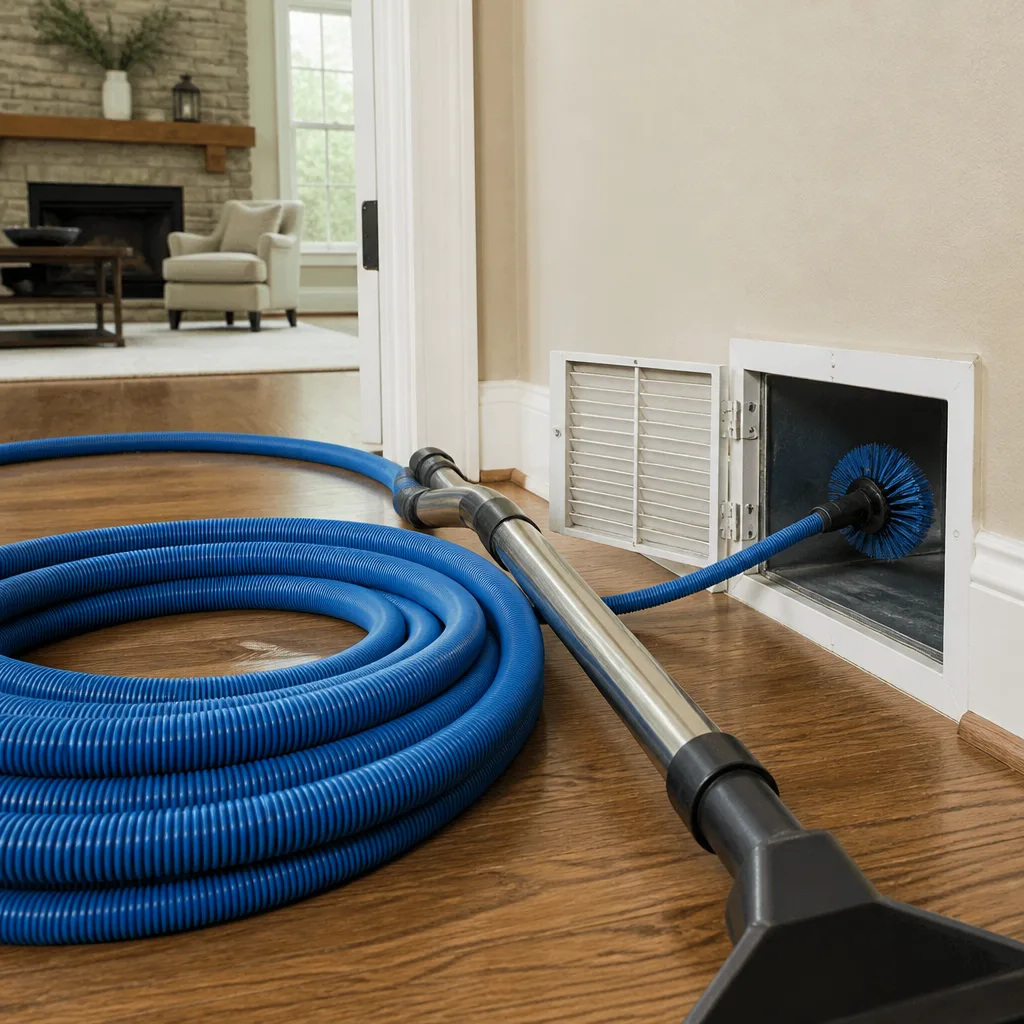 Whole-home duct cleaning
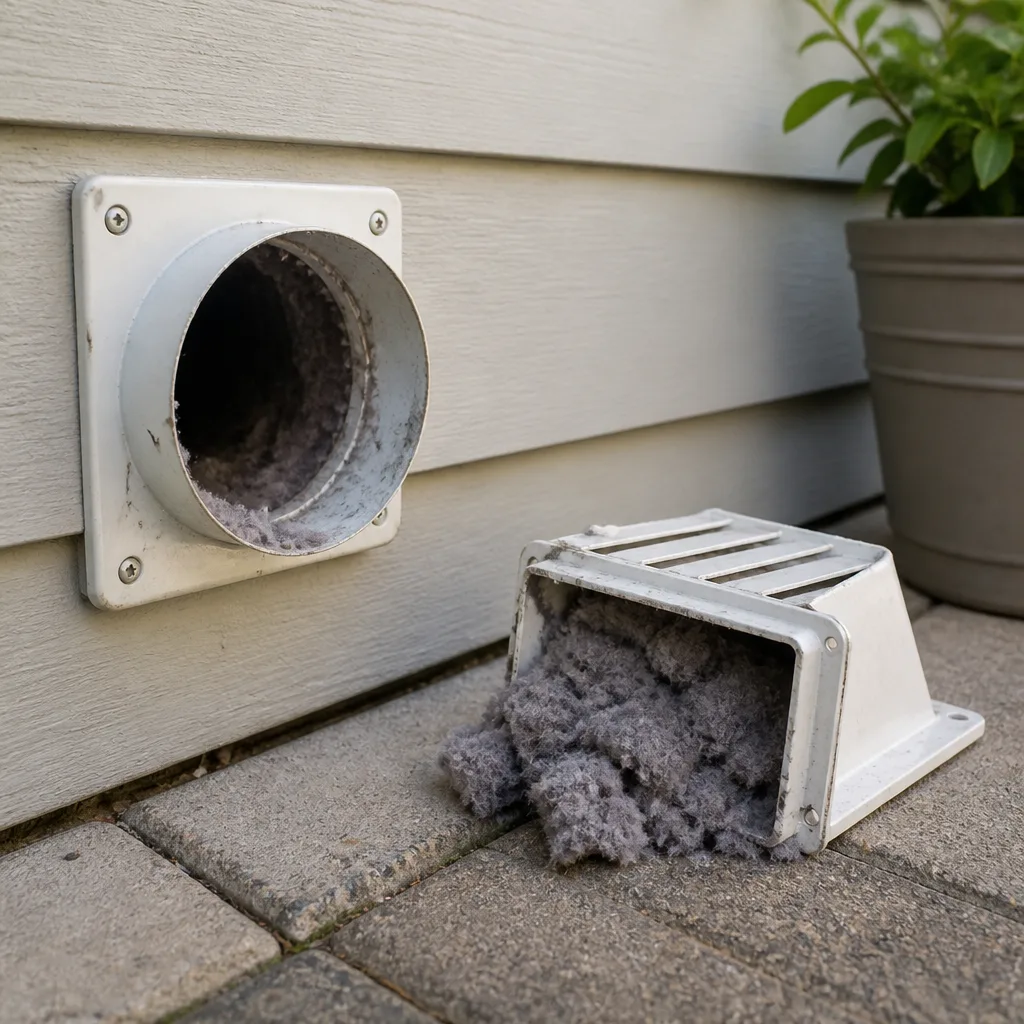 Dryer vent cleaning
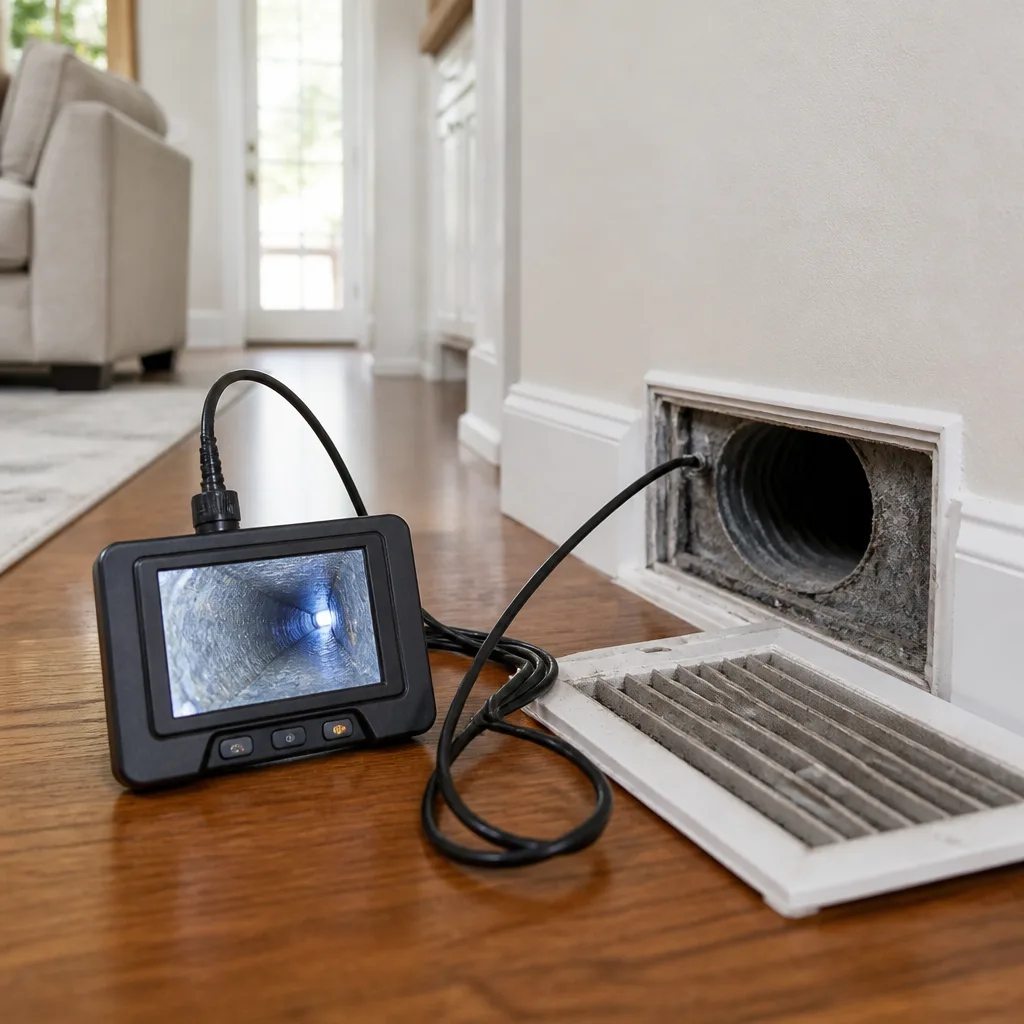 Camera inspection
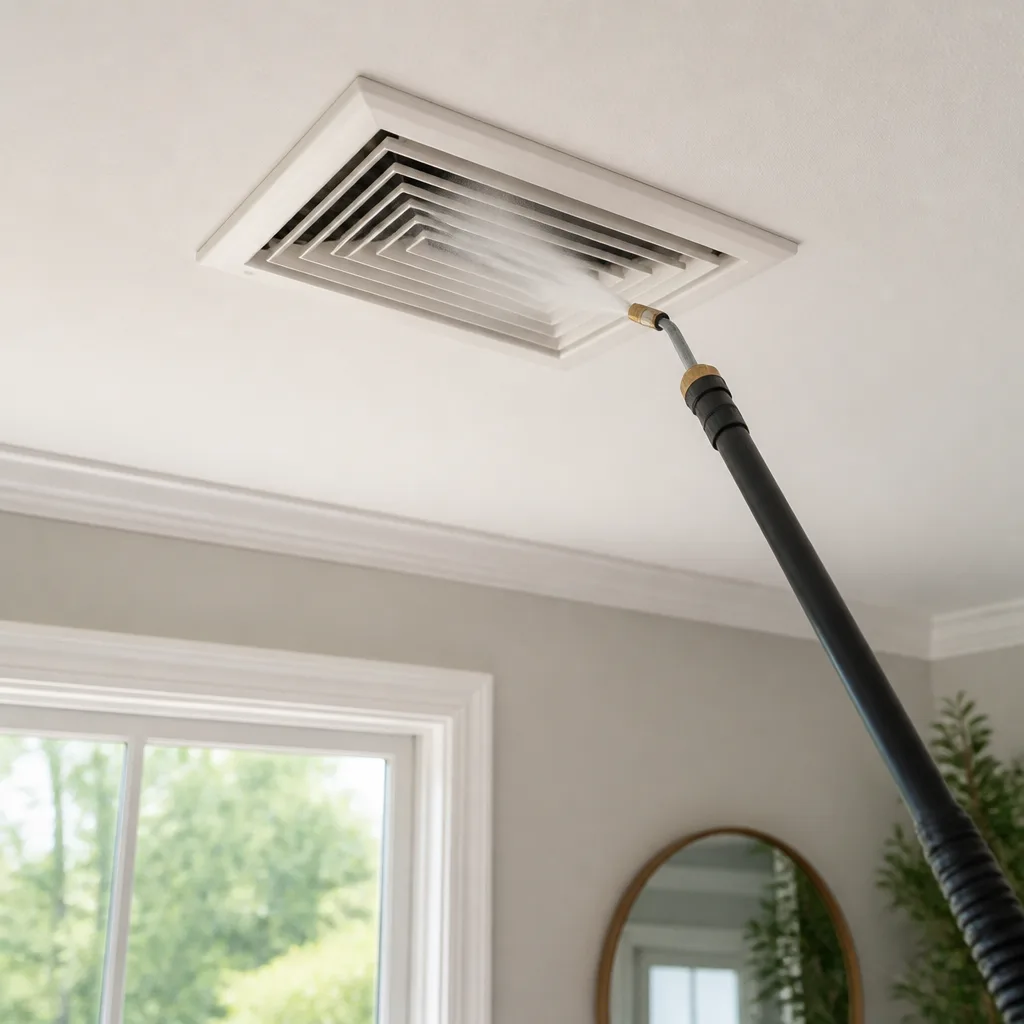 Sanitizing & deodorizing
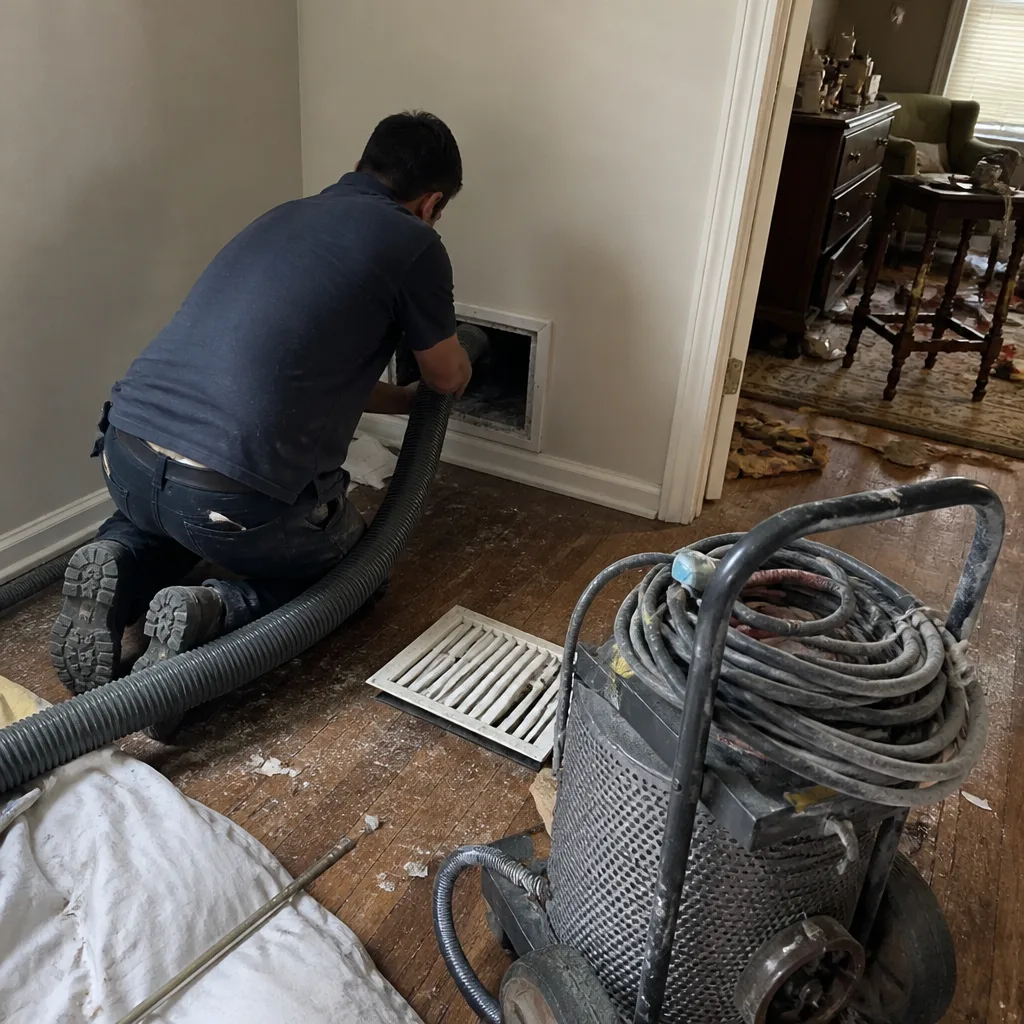
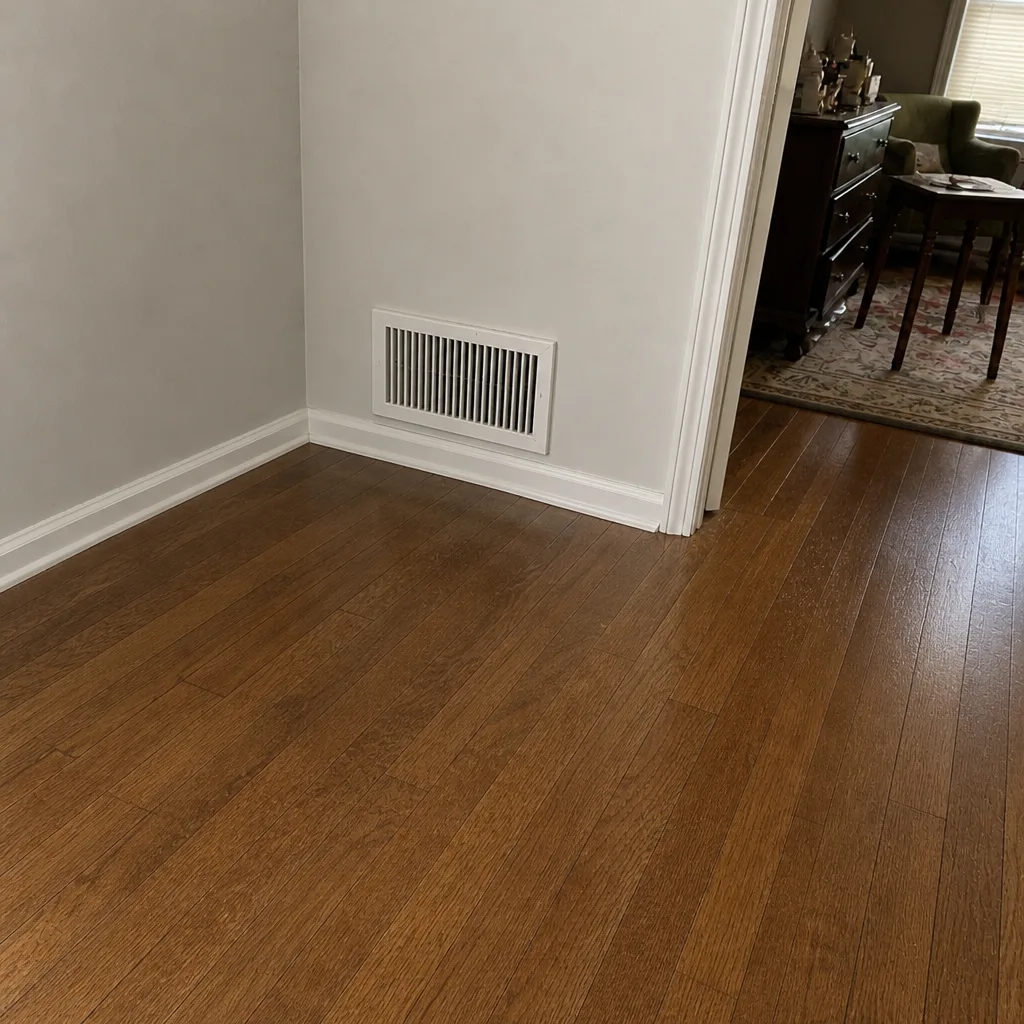
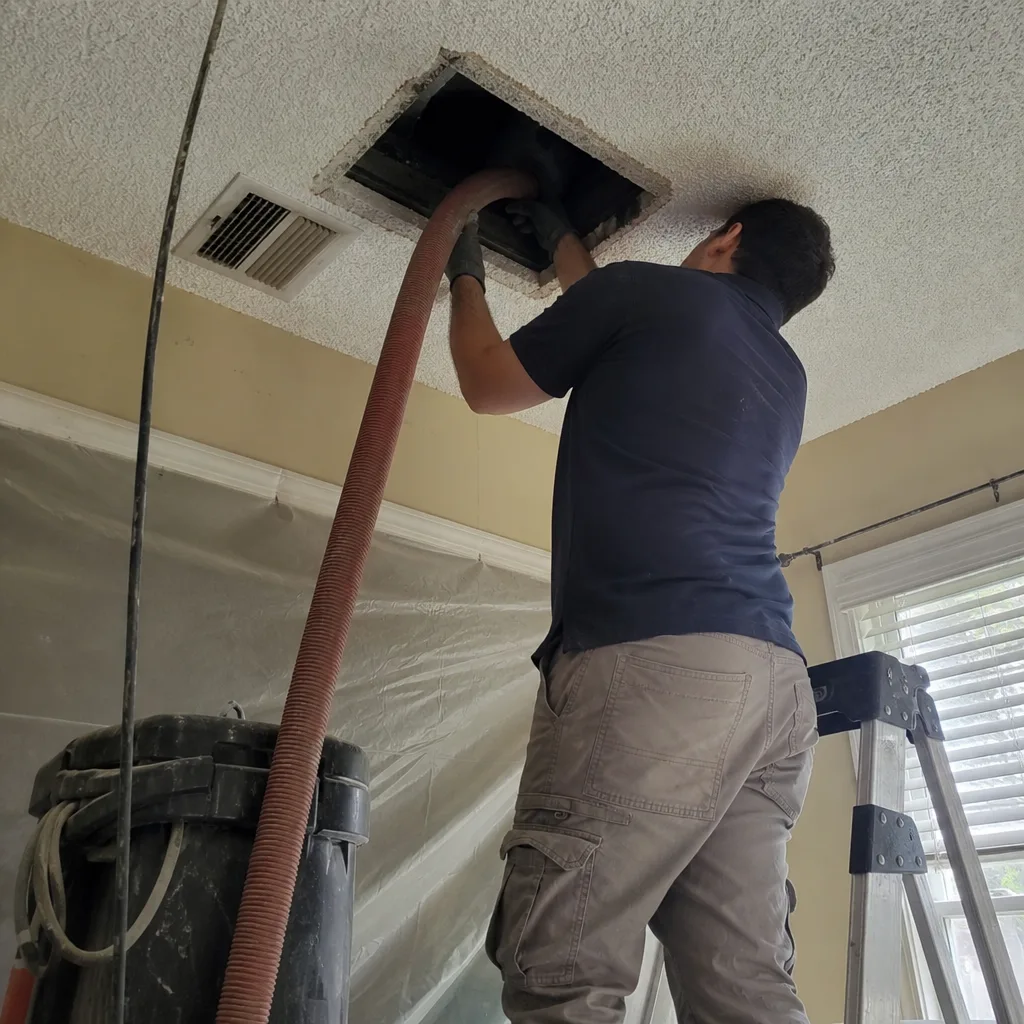
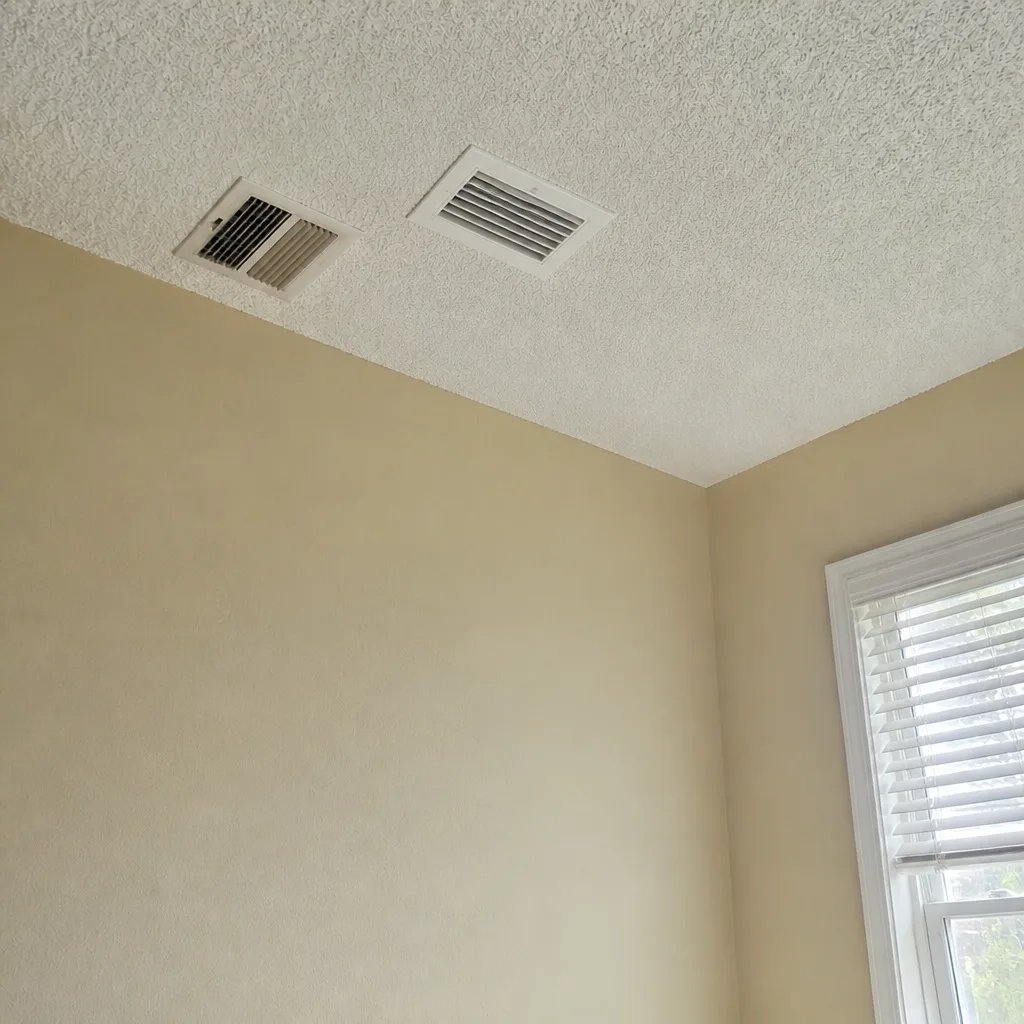
Whole-system duct and dryer vent check with before-and-after photos - you see exactly what came out of your vents
That "$99 whole-house special" is a bait ad - the real number appears once they are in your hallway, or the "clean" is a shop-vac at the register. We photograph the inside of your ducts before and after instead.
DIY vs Professional Air Duct Cleaning: The North Dallas Homeowner’s Decision Guide
A $60 dryer vent cleaning kit and a shop vac can legitimately clean a dryer duct. That same tool applied to an HVAC supply trunk line mostly moves surface debris at the register while leaving the high-velocity deposition zones at duct bends and trunk transitions completely untouched. The question was never whether DIY works. It’s whether it works where the problem actually is. This guide breaks down the anatomy of duct contamination in North Dallas homes, what consumer tools can and can’t reach, and how to decide honestly whether your system needs professional cleaning or just better register hygiene.
Quick Answer
DIY duct cleaning is mechanically useful only for the first foot or two of duct from each register, which is precisely where contamination tends to be lowest in a typical North Dallas forced-air system. Professional cleaning matters when debris has collected in trunk bends, return plenums, and flex duct inner liners, because reaching those zones requires rotary-brush equipment and negative-pressure containment that consumer tools don’t replicate. If your ducts haven’t been serviced in years, if you’ve just finished a renovation, or if you’re seeing dust patterns return within weeks of cleaning registers yourself, the professional route is the one that actually resolves the problem.
Styles & brands we work with
- Whole-home duct cleaning
- Dryer vent cleaning
- Camera inspection
- Sanitizing & deodorizing
Table of Contents
- Where duct contamination actually collects in North Dallas homes
- What DIY tools can and can’t reach
- Three DIY tasks that make professional cleaning more effective
- When DIY becomes counterproductive
- What contractor-grade negative pressure actually does
- The honest cost-benefit framework
- Why equipment grade matters more than price
- Common mistakes to avoid
Where Duct Contamination Actually Collects in North Dallas Homes
Most homeowners assume dust settles evenly through a duct system. It doesn’t. Debris concentrates at four repeatable locations in a forced-air system, and understanding those locations is the entire basis of an honest DIY-versus-professional decision.
First, trunk line bends. Where the main supply trunk changes direction, airflow decelerates just enough that heavier particles drop out of suspension and accumulate on the inside of the bend. This is where you’ll find the bulk of years of settled dust and construction debris.
Second, return plenums. The return side of the system runs at negative pressure relative to the rooms it serves, which means it pulls unfiltered air and any nearby dust back into the duct. In North Dallas homes, where AC runs hard for a much longer stretch of the year than in northern climates, the return plenum collects a disproportionate share of household dust, pet hair, and fabric fibers.
Third, flex duct inner liners. The corrugated plastic inner wall of flex duct creates ridges where debris catches. Once a ridge fills, contamination builds along the length of the run and can begin restricting airflow to that register.
Fourth, just past each register boot, contamination is typically lighter, not heavier. This is the counterintuitive part. Air velocity is highest near the register opening, which keeps particles suspended and moving. Dust settles where airflow slows, not where it exits.
That ordering matters. In our experience across North Dallas, the contamination load in an average residential system is concentrated in the trunk, the return, and the flex liner, all of which sit well past the point where a homeowner can reach with a vacuum hose.
What DIY Tools Can and Can’t Reach
The typical DIY duct cleaning setup is a wet/dry shop vac with a length of flexible hose, sometimes paired with a spinning brush kit marketed for duct use. It can generate decent suction at the nozzle. It cannot generate the airflow, containment, or mechanical agitation needed to move debris from most of your duct system.
What consumer tools can reach
- Register grilles and return grilles, which are removable and cleanable by hand or with a vacuum brush
- The first 12 to 18 inches of branch duct behind each register
- Loose surface dust that has already settled and isn’t adhered to duct walls
- Dryer vent runs up to roughly 8 feet, using a dedicated dryer vent brush kit
What consumer tools can’t reach
- Trunk line bends, where debris volume is highest
- Return plenums and the negative-pressure side of the system
- The corrugated inner wall of flex duct beyond the first foot
- Air handler components, blower wheel, and evaporator coil surfaces
- Any contamination that has bonded to duct walls over time
The mechanical limitation isn’t effort or skill. A homeowner with good tools and patience can spend a full Saturday on a duct system and still only touch the low-contamination zones. That’s the honest answer to the DIY-versus-professional question: DIY reaches where the problem usually isn’t.
Three DIY Tasks That Make Professional Cleaning More Effective and Extend the Interval
There are legitimate DIY tasks in duct maintenance, and doing them actually improves the outcome of professional service and lengthens the time between professional cleanings. None of them replace a professional clean, but all three are worth doing.
- Register cleaning. Remove supply and return grilles, wash them in a tub with dish soap, dry, and reinstall. Grilles are the highest-visible-dust surface and the easiest to address. This does more for visible dust in a room than most people expect.
- Return grille washing. Return grilles face the living space and pull in household dust directly, so they soil faster than supply registers. Wiping them down monthly keeps that dust from entering the return duct.
- Accessible flex duct visual inspection. Flex duct is often visible in an attic. With the system off, look for kinks, crushed sections, disconnected collars, or obvious debris buildup at connections. Flagging problems before a professional cleaning means the technician can address them in the same visit.
These three tasks are what we recommend to every North Dallas homeowner who asks whether DIY maintenance is worth doing. The answer is yes, in this specific sense: it extends intervals and makes the eventual professional service more targeted. What it doesn’t do is clean the trunk, the return plenum, or the flex liner, which is where the actual load sits.
When DIY Becomes Counterproductive
DIY duct cleaning is not dangerous in the sense that a homeowner is likely to injure themselves. It’s dangerous in a subtler sense: in certain situations, agitating debris without containment spreads the problem rather than solving it. Four scenarios deserve specific caution.
Mold colonies inside ductwork. If a duct system has visible mold growth or a strong musty smell that returns after register cleaning, the growth is likely on duct surfaces that a shop vac can agitate but not remove. Disturbing it without negative-pressure containment can aerosolize spores into the living space. Remediation of mold in ductwork is a containment job, not a scrubbing job.
Vermiculite-era duct insulation. Some older homes have duct insulation or attic insulation that may contain vermiculite, a material that can contain asbestos. Any North Dallas home with insulation from a certain vintage should have it tested before anyone disturbs it. If vermiculite is possible, don’t run a shop vac through the attic; call a professional who can specify containment equipment. We use Abatement Technologies filtration and negative-pressure equipment for exactly this reason: it’s the same category of gear used in abatement work, and it’s the honest tool for a job that might involve a hazardous material.
Post-renovation dust. Drywall dust and construction debris are fine particles that stay airborne for days and coat ducts more thoroughly than ordinary household dust. Vacuuming registers after a renovation without sealing the supply side just redistributes the dust into the living space. The ducts need a full-system clean with containment, not a register wipe.
Pest or moisture problems. Rodent droppings, insect debris, or a moisture source feeding biological growth inside ductwork are contamination problems that require remediation, not cleaning. Consumer tools don’t sanitize; they only disturb.
What Contractor-Grade Negative Pressure Actually Does
“Negative pressure” is often thrown around as a marketing phrase. It has a specific physical meaning and it’s the single biggest reason professional duct cleaning produces a different result from DIY.
When a duct cleaning system applies negative pressure to the ductwork, it creates a pressure differential between the inside of the ducts and the room air. Because air moves from higher pressure toward lower pressure, any debris loosened inside the duct is pulled toward the collection point (usually a HEPA-filtered vacuum connection at a strategic point in the system), not pushed out through the registers.
Consumer tools work the opposite way in practice. A shop vac pushed into a register blows air out of its exhaust port at the same time it sucks debris in at the nozzle, and the exhaust port is usually in the living space. Some of what gets disturbed ends up in the room.
Professional systems solve this by combining three things consumer tools can’t replicate: continuous negative pressure across the whole duct system, high-volume filtration that captures the particles the pressure differential pulls out, and rotary agitation (like a Rotobrush system or Nikro extraction equipment) that breaks debris loose from duct walls rather than just moving loose dust. The pressure differential does the heavy lifting. The brush does the wall work. The filtration captures what comes out. In a North Dallas home, that combination is what actually removes years of settled debris from a trunk bend rather than just thinning it out.
The Honest Cost-Benefit Framework
A straightforward way to think about the money: a proper professional duct cleaning on a typical North Dallas home runs in the range of a mid-hundreds service, not because the work is difficult, but because the equipment is expensive and the process takes real time. A DIY setup that gets anywhere close to the same result would require renting a rotary brush system, buying containment film, and sourcing HEPA filtration, all of which adds up close to the professional price without the experience to use it correctly.
When professional cleaning is genuinely the lower total cost
- You’ve had multiple DIY attempts and the dust comes back within weeks. That pattern usually means contamination in the trunk or return is still there. Repeated DIY is money spent without a result.
- Your evaporator coil needs cleaning. A dirty coil driven by dirty ducts is a repair-and-clean cycle. Coil cleaning costs money; doing it twice because the ducts are still contaminating the coil costs more.
- You’re replacing filters early. Filters loading in a fraction of their expected interval is a duct problem. Filter replacement acceleration is a quiet ongoing cost that DIY cleaning won’t fix.
- Airflow to specific rooms is weak. Debris in flex liner or trunk is often the cause, and DIY can’t reach it.
- You’re in a renovation or a pest-remediation situation. Containment isn’t optional in these cases, and DIY doesn’t provide it.
There’s an honest case in the other direction, too. If your system is relatively new, has been professionally cleaned in the last few years, and your only complaint is register dust, DIY register cleaning handles it. We’d rather tell a homeowner that than sell a cleaning they don’t need. That’s why our estimates are free and the price is set per job in writing before any work starts.
Why Equipment Grade Matters More Than Price
Two duct cleaning quotes can be hundreds of dollars apart and look identical on paper. The difference is almost always the equipment, and equipment determines whether the trunk actually gets cleaned or just gets agitated.
Professional remediation work in North Dallas uses rotary-brush systems and HVAC extraction units built for the purpose. Rotobrush is industry standard for residential rotary-brush cleaning. Nikro equipment is specified by commercial and remediation contractors. Those tools are what enable a technician to reach a trunk bend, break the debris loose from the duct wall, and pull it into a contained collection point. A shop vac in a register opening is not the same tool in any meaningful way, regardless of what the coupon on the door-hanger implies.
The same principle applies to what happens after cleaning. If the cleaning exposes duct seams that are leaking, the right response is sealing, not another cleaning. If the system has a persistent musty smell, sanitizing with Guardsman-grade products is the honest next step. Whole-home filtration upgrades from Honeywell and Aprilaire are available when the underlying issue is fine particulates that cleaning alone won’t address. All of that work belongs in the same visit, and that’s why we handle cleaning, sanitizing, repair, and sealing as one scope rather than handing the customer back to a second contractor.
If you’re weighing professional cleaning against DIY for your own home, the right starting point is a free estimate from a team that will tell you honestly whether you need it. We answer 24/7. Fast dispatch from 7am to 7pm, Sunday through Friday.
Common Mistakes to Avoid
- Assuming DIY is “the same thing, cheaper.” It isn’t. Consumer tools reach the register and first foot of duct; the debris load in a North Dallas home is past that point. Miscalibrating the comparison leads to repeated DIY spending that never resolves the problem.
- Running a shop vac inside a duct with visible mold. Agitating mold growth without containment aerosolizes it into the living space. If you see or smell mold in the ducts, get a professional assessment before touching it.
- Cleaning registers but never washing return grilles. Return grilles face the living space and load up faster than supply grilles. Skipping them means debris keeps entering the return side.
- Assuming the cheapest quote is the best deal. A very low price usually means a shop vac stuffed into a register. Ask what equipment will be used and whether containment will be set up. If the answer is vague, the trunk isn’t getting cleaned.
- Ignoring dryer vents because they’re “not part of the HVAC.” The dryer vent is a separate fire-risk pathway and standard duct cleaning doesn’t necessarily include it. Ask specifically.
- Not addressing leaks that cleaning exposes. Cleaning often reveals disconnected collars or leaky seams. If those aren’t sealed, contaminants re-enter the system immediately. The proper sequence is clean, then seal.
- Cleaning without knowing whether the coil is dirty. A contaminated evaporator coil keeps sending dust downstream. If the coil is dirty, it needs cleaning in the same scope or the duct cleaning gets undone.
See the difference
 Before
 After
 Before
 After
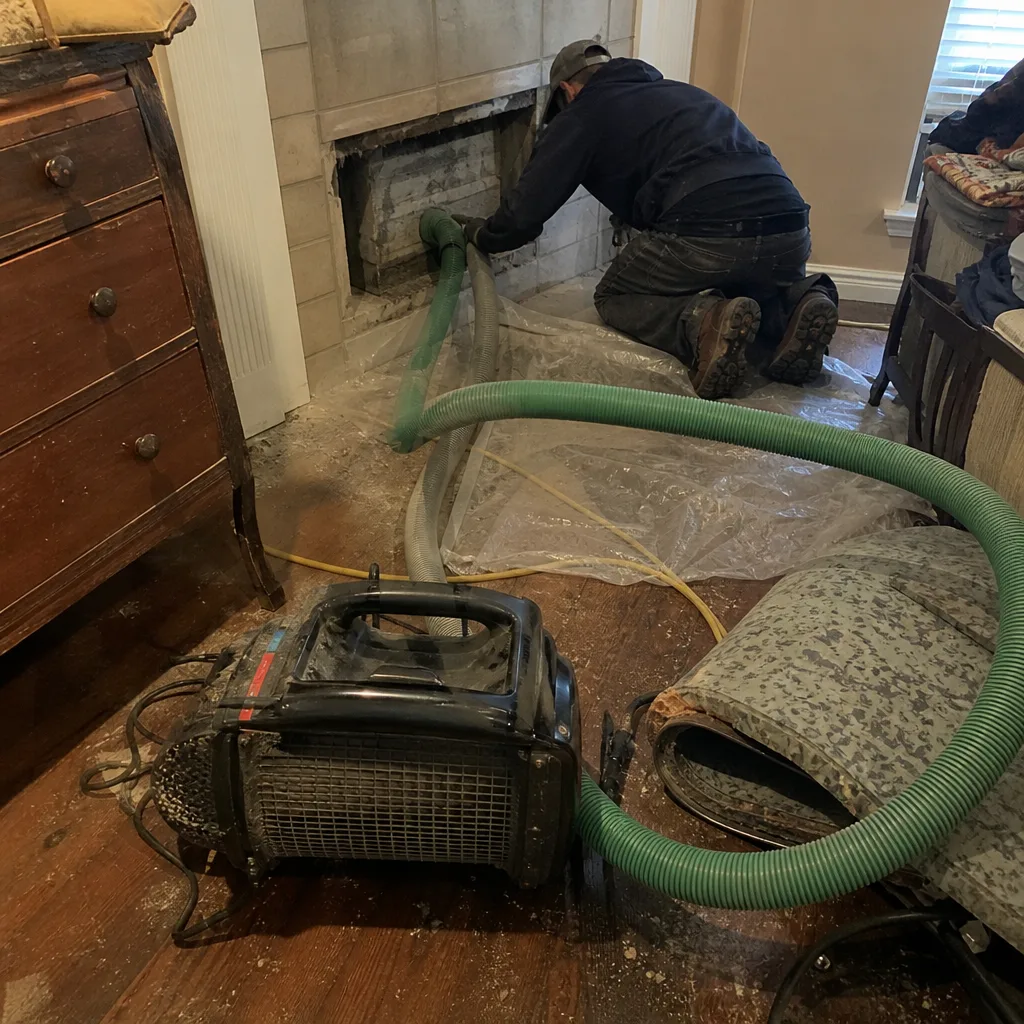 Before
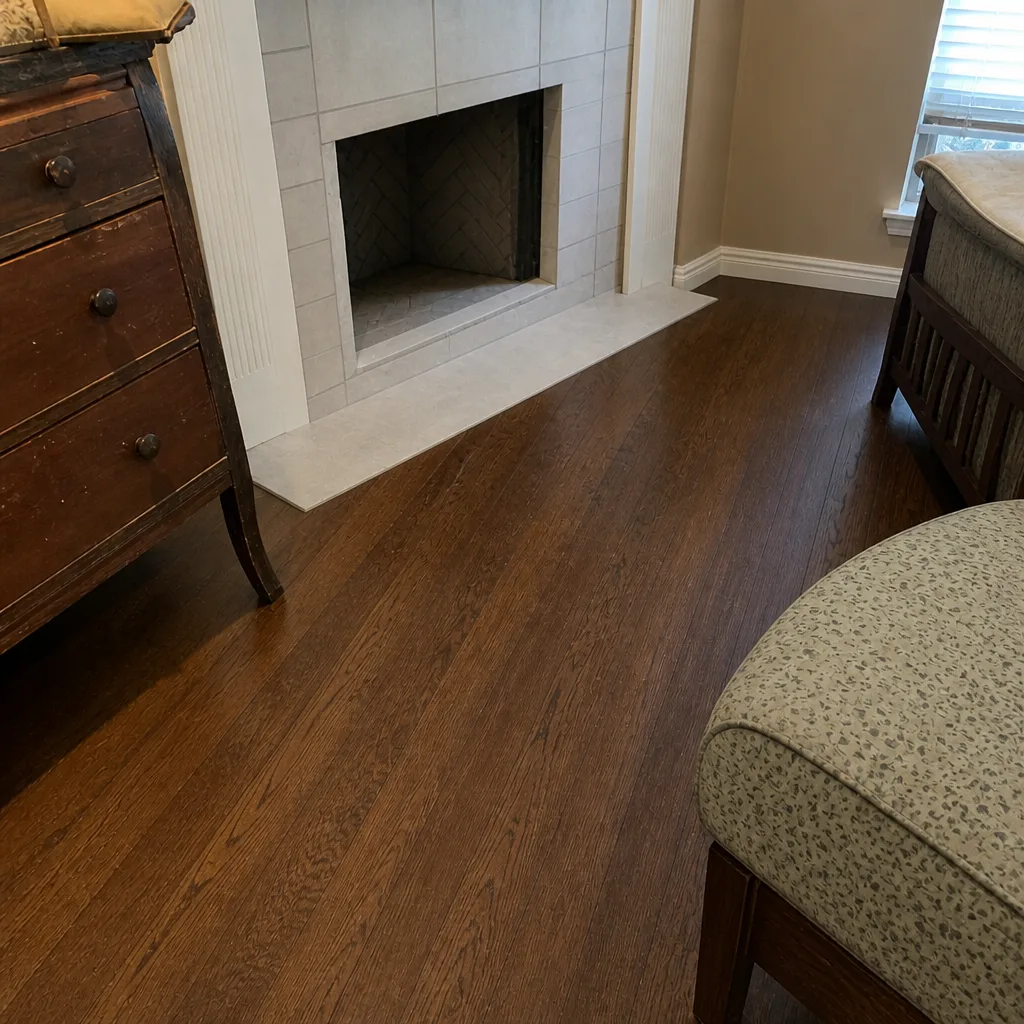 After
When to Call a Professional
Call a professional when the symptoms you’re chasing live past the register: dust that returns within weeks of DIY cleaning, weak airflow to specific rooms, musty odors that persist after register washing, a recent renovation, a pest issue, or visible mold in the system. Also call when the ducts have never been cleaned and you’re not sure of the history, because remediation of a first-time system usually reveals problems that need to be handled in the same visit.
Air Duct Cleaning North Dallas offers free estimates, and the price is set per job in writing before any work starts. Our technicians have up to 10 years of experience, and we bring contractor-grade equipment to every job: Rotobrush, Nikro, and Abatement Technologies for real containment. Call (833) 482-6392. We answer 24/7. Fast dispatch from 7am to 7pm, Sunday through Friday.
Frequently Asked Questions
Most residential duct cleaning in North Dallas falls in a typical range of several hundred dollars for a whole system, though the exact price depends on the number of registers, the number of HVAC systems, and whether additional work like sanitizing or sealing is needed. We price per job, not per vent, and the written estimate you receive is the final price. Call (833) 482-6392 for an exact quote. Estimates are free.
The most common reason is equipment. A very low quote usually means the work will be done with a shop vacuum and a length of hose, which only reaches the register and the first foot of branch duct. Professional-grade cleaning requires rotary-brush equipment, HVAC extraction, and negative-pressure containment, all of which carry real cost. Ask any provider what equipment they’ll use; the answer explains the price difference immediately. Call (833) 482-6392 for an honest scope-based quote.
Ask for before-and-after photos of your own ducts. A professional crew can photograph accessible duct interiors at the start and end of a job, and those photos are the only evidence that matters. If a provider won’t show you photographic evidence from your specific system, that’s a signal to look elsewhere. We photograph before and after on every job. Call (833) 482-6392 to schedule.
For most North Dallas homes, professional duct cleaning every three to five years is a reasonable interval, with more frequent cleaning if you have pets, allergies, recent renovations, or a long cooling season that keeps the system running hard. A system that’s never been cleaned may need it sooner regardless of what the calendar says. Call (833) 482-6392 if you’re unsure when your ducts were last serviced, and we’ll give you a straight answer.
You can clean the first foot or so of duct from each register, which is useful maintenance but doesn’t address the trunk, the return plenum, or the flex liner where debris actually concentrates. DIY is legitimate for register cleaning and returning the grilles to a clean state, but it isn’t a substitute for a full-system clean. If dust returns within a few weeks of DIY work, the deeper zones still need professional attention. Call (833) 482-6392 to find out what your system actually needs.
Not necessarily. Dryer vent cleaning is a distinct service with its own risks and equipment, and it should be treated as its own scope of work, not a bonus. Many duct-only companies skip it or treat it as an afterthought. We handle it as a dedicated service because a clogged dryer vent is a fire pathway, not a housekeeping matter. Call (833) 482-6392 with the details of both systems and we’ll quote them clearly and separately.
The Bottom Line
DIY duct cleaning isn’t dangerous and it isn’t worthless. It’s limited. It reaches the register, the first foot of branch duct, and the grilles, all of which are useful maintenance and none of which is where the bulk of contamination lives in a typical North Dallas forced-air system. Professional cleaning matters when the load is in the trunk, the return plenum, the flex liner, or the air handler, which is where most of it is. Use the DIY tasks in this guide, keep your registers and grilles clean, and call for professional help when the symptoms you’re chasing keep coming back. Before and after photos, a written price, and a team that will tell you honestly what your system needs: that’s the standard worth holding any provider to.
If you’d like a straight assessment of your ducts, we’re here for it. Air Duct Cleaning North Dallas offers free estimates throughout North Dallas, and the price is set per job in writing before we start. If DIY home maintenance is part of your routine, you may also want to read our guide to air duct cleaning and our walkthrough of dryer vent cleaning, both of which explain what professional service actually involves. If the contamination has reached the air handler, our page on HVAC cleaning covers that scope of work in detail. Call (833) 482-6392. We answer 24/7. Fast dispatch from 7am to 7pm, Sunday through Friday.
Written by the team at Air Duct Cleaning North Dallas.