
Last updated November 23, 2026
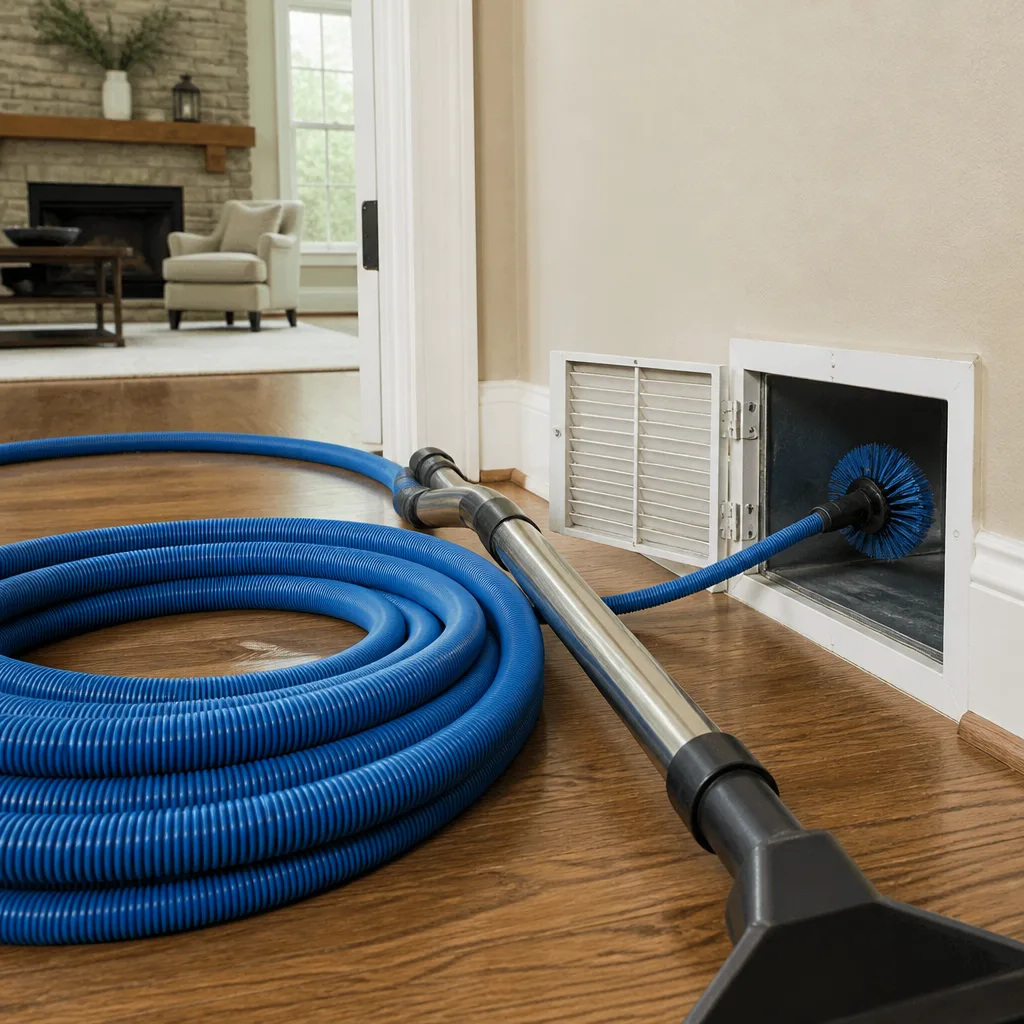 Whole-home duct cleaning
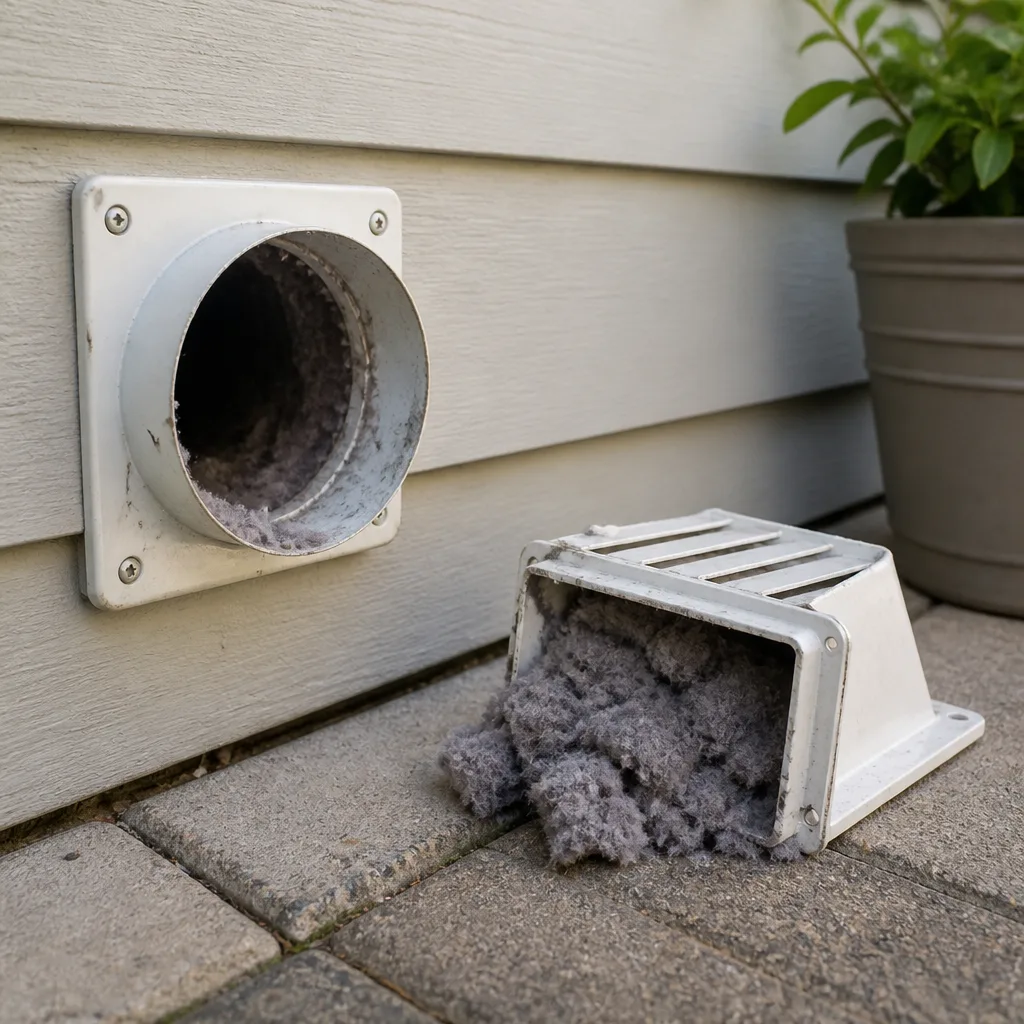 Dryer vent cleaning
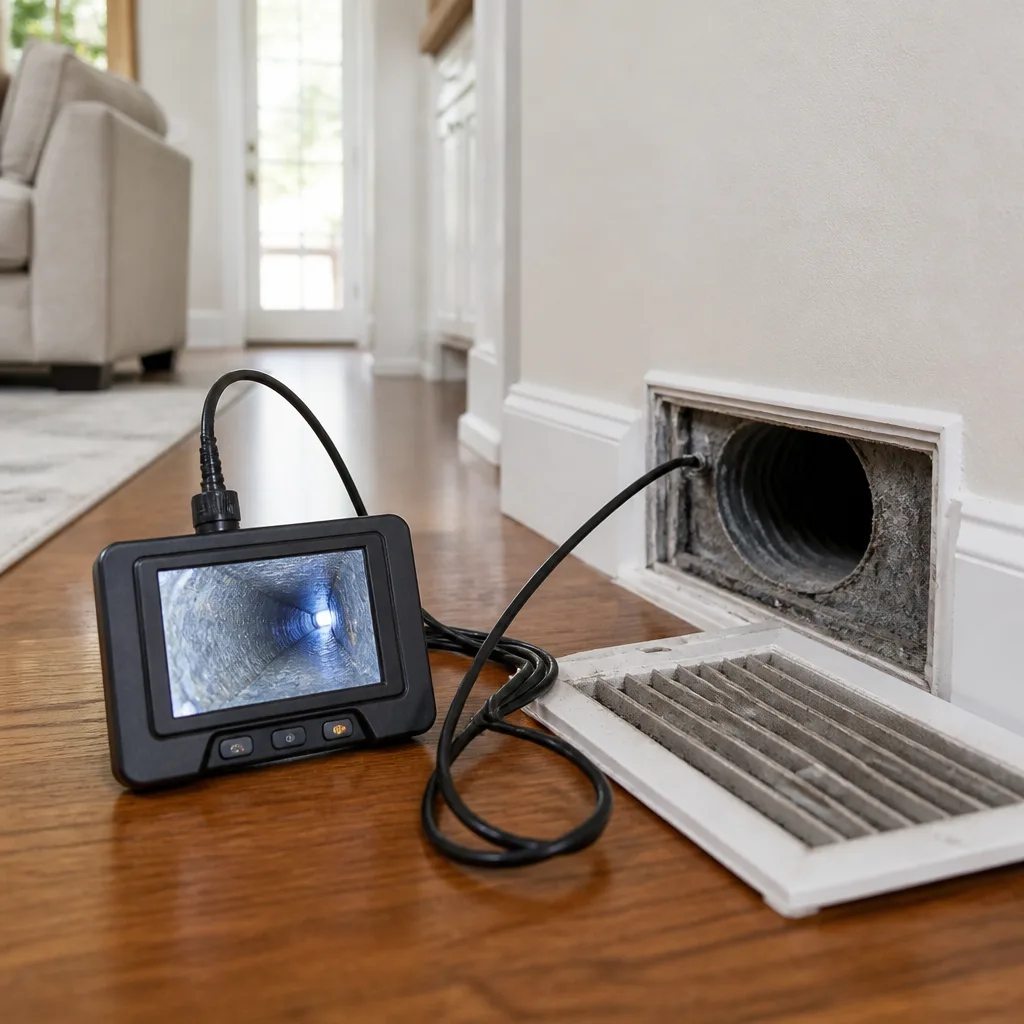 Camera inspection
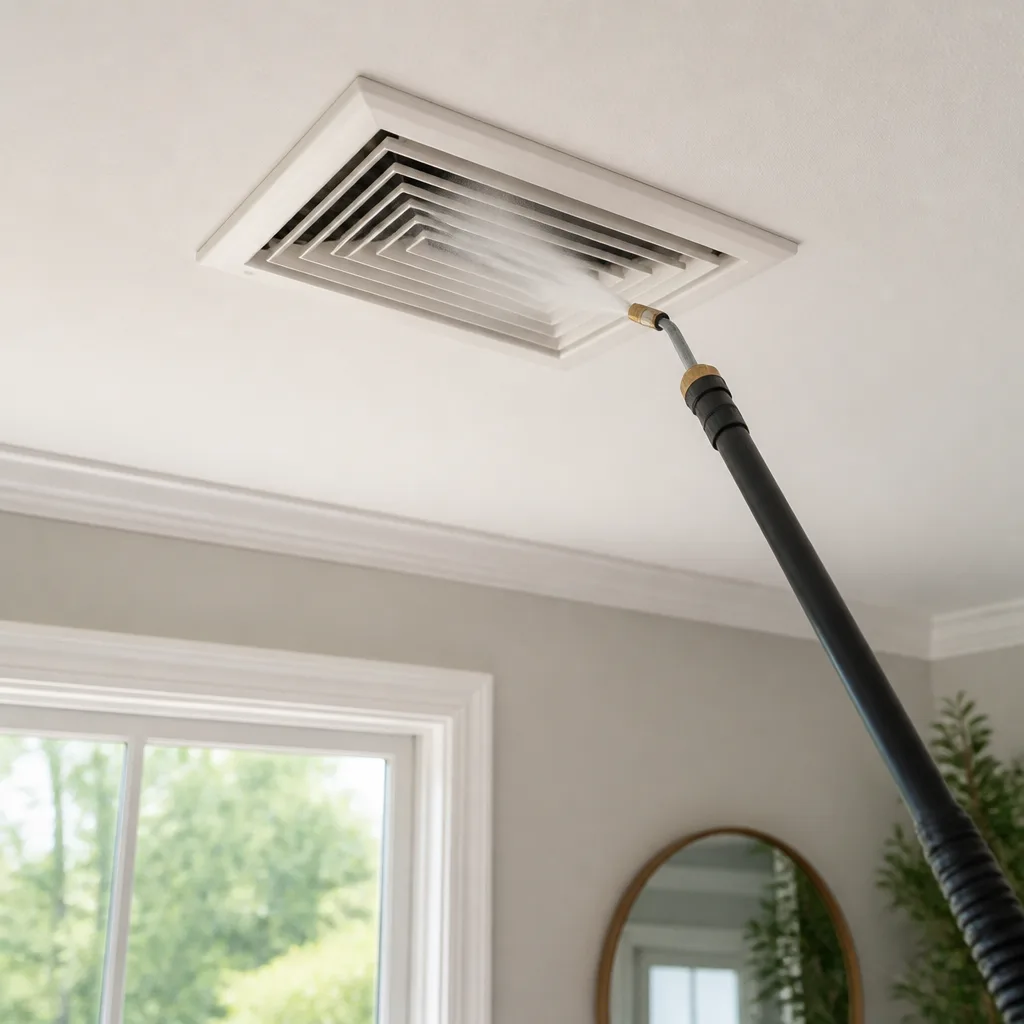 Sanitizing & deodorizing
Whole-system duct and dryer vent check with before-and-after photos - you see exactly what came out of your vents
That "$99 whole-house special" is a bait ad - the real number appears once they are in your hallway, or the "clean" is a shop-vac at the register. We photograph the inside of your ducts before and after instead.
The Complete Guide to Air Duct Cleaning in North Dallas
Most homeowners assume duct contamination is a function of time. The ducts were clean when the house was built, and they gradually get dirty as the years pass. That model is convenient, and it’s mostly wrong for this part of Texas.
The EPA’s most-cited duct cleaning study was conducted in Canadian homes – houses that run their heating systems as the dominant air-mover. North Dallas homes push conditioned air through the same ductwork roughly 2,400 hours a year, because the air conditioner runs from spring into fall. That volume redeposits particulates at a rate that study was never designed to measure. Add red clay dust, cedar pollen season, and new-construction drywall debris, and you get a contamination profile that generic national advice doesn’t fit.
This guide maps what actually accumulates inside North Dallas ductwork, how contractor-grade remediation differs from a quick blowout, and how to tell which one you’re being sold.
Quick Answer
Air duct cleaning in North Dallas is worth doing when your system shows measurable evidence of contamination – visible debris at the registers, musty odor when the AC starts, microbial growth inside the plenum, or a recent renovation that filled the return with drywall dust – and the right cleaning is a full-contact extraction with containment, not a surface pass. In this climate, HVAC runtime hours matter more than calendar years, so a five-year-old North Dallas house running 2,400 hours a year can be dirtier than a fifteen-year-old house in a mild summer region. Call (833) 482-6392 for a free estimate; we answer 24/7, with fast dispatch from 7am to 7pm, Sunday through Friday.
Styles & brands we work with
- Whole-home duct cleaning
- Dryer vent cleaning
- Camera inspection
- Sanitizing & deodorizing
Table of Contents
- What Actually Accumulates in North Dallas Ductwork
- Runtime Hours vs. Calendar Years: The Right Cleaning Trigger
- Contractor-Grade Equipment vs. a Blowout Truck
- What a Pre-Cleaning Inspection Should Document
- How a Full System Extraction Actually Works
- Sanitizing, Sealing, and Air Quality Upgrades
- The Dryer Vent Is a Fire Pathway, Not an Add-On
- Red Flags in a Duct Cleaning Service Agreement
What Actually Accumulates in North Dallas Ductwork
North Dallas sits on expansive clay soil, and that soil is a dust factory. When the ground dries in summer, it contracts and cracks; when it takes on water, it swells. That movement, combined with wind over open lots and highway corridors, sends fine clay particulates into the air, and those particulates settle on every surface that sees traffic – including the return-side grilles and plenum of your HVAC system.
Then the air conditioner picks them up. A North Dallas system typically runs from March or April into October, and in a well-insulated house it cycles often enough that the supply ducts never really go quiet. Clay dust, cedar pollen during the winter and early spring pollen window, lint from bedding and clothing, and the fine fiber shed from duct board all move through the same channel.
Newer construction adds a third layer. Homes built during the last decade of North Dallas infill development often sat through months of drywall sanding, tile cutting, cabinet installation, and paint. Drywall dust is fine, alkaline, and sticky once it’s damp – which is exactly what happens when the AC runs during construction. That dust settles into the horizontal runs and the return plenum and doesn’t fully clear for years, even with a good filter.
What you end up with is a contamination profile that looks different from the national averages you’ll find in generic guides:
- Clay and mineral dust from local soil, which is heavier than typical household dust and settles in low spots and horizontal runs.
- Pollen loads during cedar and spring tree pollen season, which coat the return side and the evaporator coil face.
- Drywall and construction debris in homes built or renovated recently, which is fine enough to bypass many standard filters.
- Biological growth in the plenum and near the coil, encouraged by the long cooling season and the condensation that comes with it.
- Duct board fiber in older insulated runs, which sheds as it ages and adds to the total particulate load.
That’s the case for treating North Dallas like its own category. Generic “clean your ducts every three to five years” advice doesn’t reflect what a long cooling season does to a house here.
Runtime Hours vs. Calendar Years: The Right Cleaning Trigger
The better question isn’t “how old is the house” – it’s “how many hours has the blower actually run?” HVAC runtime hours measure the actual work the system has done, and in North Dallas that number climbs fast. A house that runs its AC six months a year at an average of 40% duty cycle accumulates roughly 1,750 hours of blower time annually. Round up for a system that also runs in heating mode and you’re near the 2,400-hour figure that defines this region’s profile.
Put another way: a five-year-old North Dallas house can have as many blower hours as a fifteen-year-old house in a cooler climate. That’s why we ask about runtime, filter change frequency, and recent renovation – not just the build year.
Here’s a workable decision framework for North Dallas homeowners:
- Count the years of service and multiply by roughly 1,700 to 2,400 hours per year of active conditioning. If you’re past 6,000 to 8,000 hours, a professional inspection is reasonable.
- Check the filter’s condition after 30 days. A filter that loads up quickly is telling you the return is pulling a lot of particulate. That’s a contamination signal, not a filter signal.
- Note any renovation in the last two years. Drywall work is the single most reliable trigger for a duct cleaning in North Dallas, regardless of system age.
- Pay attention to odor and dust. A musty smell at startup or visible dust settling on furniture right after the AC kicks on are runtime symptoms, not cosmetic ones.
- Check the coil face and plenum during any HVAC service. If a technician opens the air handler and the plenum is coated, that’s the moment to schedule cleaning.
For a proper assessment, air duct cleaning starts with a look at the whole system, not just the register grilles.
Contractor-Grade Equipment vs. a Blowout Truck
This is where most duct cleaning quotes fail to describe what you’re actually buying. The difference between a proper extraction and a cosmetic pass isn’t the price on the coupon – it’s whether the equipment can move enough air to lift settled debris out of the run and hold it in containment.
Airflow is measured in CFM, and it determines whether the tool at the register extracts debris or merely agitates it. A portable shop-style vacuum with a filter bag pulls a fraction of what a rotary-brush system paired with a negative-pressure truck mount can generate. When the extraction CFM is too low, the brush loosens debris that then settles downstream, in the plenum, or back into the living space – which is worse than doing nothing.
The equipment we use on North Dallas jobs reflects what remediation contractors specify for their own work:
- Rotobrush rotary-brush system – a contact cleaning head that runs the length of the supply and return runs, mechanically lifting what’s adhered to the duct wall.
- Nikro HVAC cleaning equipment – the extraction and containment side, matched to the brush so debris is captured, not displaced.
- Abatement Technologies negative-air and filtration tools – the same category of equipment used in mold and asbestos abatement, which lets us hold a pressure differential during the job and keep contaminants out of the occupied space.
The combination matters. A rotary brush without real negative pressure is a dust dispersal tool. Negative pressure without a brush is just an air mover. When the two work together, the brush loosens the material and the extraction pulls it into containment at the same rate. That’s the “contractor-grade equipment, residential pricing” difference – the hardware does the work, not the hours the technician stands in your hallway.
A related point: the same control matters on the HVAC side. HVAC cleaning covers the coil, blower, and plenum – the parts of the system duct cleaning can’t reach, and the parts North Dallas homeowners most often forget.
What a Pre-Cleaning Inspection Should Document
Before a single tool enters the system, a proper inspection should establish what kind of ductwork you have, what’s in it, and what could go wrong during cleaning. That sounds obvious, but many companies skip straight to the register with a vacuum hose. Here’s what a thorough inspection should document:
- Duct material by section. Sheet metal, duct board, and flex duct each require different tool heads and different pressures. Duct board can be abraded by a brush set too aggressively. Flex duct can collapse under too much negative pressure. The inspector needs to note which is where before cleaning starts.
- Flex duct integrity. Flex runs sag, kink, and tear at the collar. A torn inner liner leaks air and traps debris in the insulation jacket, and cleaning that run without repair can make it worse.
- Visible microbial presence in the plenum and near the coil. Discoloration, musty odor, and surface growth are different findings and call for different responses. Sanitizing should follow cleaning, never replace it.
- Access points and register count. A system with ten registers and two returns is a different job than one with twenty-two branches. The estimate should reflect the actual system, not a per-vent line item.
- Filter type and condition. A high-MERV filter on an undersized return can starve the blower. Mismatched filtration is a common North Dallas finding and worth correcting at the same service call.
- Sealing integrity. Loose joints at the plenum, disconnected flex collars, and gaps around the air handler are places where the system is pulling attic or crawlspace air. Cleaning without sealing those gaps is a temporary fix.
Ask to see the inspection findings before you sign the estimate. A company that documents the system will also be able to show you what was extracted – see our full air duct cleaning North Dallas service overview for what that process looks like from start to finish.
How a Full System Extraction Actually Works
The cleaning itself follows a sequence, and the order matters. Here’s what a proper full-extraction job looks like on a North Dallas home:
- Set up containment. Negative air pressure is established at the air handler with an Abatement Technologies filtration unit, so the rest of the house stays positively pressurized relative to the working area.
- Seal registers and returns except the working port. All the open ends of the system are closed off so the extraction has somewhere to pull from.
- Brush the supply and return runs. The Rotobrush rotary-brush head travels the length of each run, agitating adhered material back into the air stream where the Nikro extraction unit captures it.
- Clean the plenum and air handler interior. The return plenum is where settling is heaviest. It gets brush and HEPA-vacuum contact, and the blower wheel and cabinet get cleaned as part of the HVAC side of the job.
- Clean the evaporator coil face. A rinse or a coil-specific cleaner removes what’s bridged the fins. This is often the single biggest airflow improvement on a North Dallas system.
- Verify the extraction with before-and-after photos. Every register, the plenum interior, and the coil face should be photographed before and after so you can see what was removed.
- Seal what was found leaking. Loose collars, gaps at the plenum, and disconnected runs are sealed at the point they’re exposed, not left for a second contractor.
Finished before we pack up: photos of your own ducts, not stock images. If a company can’t show you the before-and-after on your job, you don’t know what was actually done. That transparency matters more than the price tag on the coupon, which is why we build it into every job.
The full extraction sequence runs three to five hours on a typical North Dallas house, depending on system size and how much is in the returns.
Sanitizing, Sealing, and Air Quality Upgrades
Cleaning removes what’s in the duct. Sanitizing treats what cleaning exposes, and sealing prevents the problem from coming back at the same rate. All three belong together, because a cleaned-and-unsealed system pulls attic dust into the living space and undoes the work.
Sanitizing is applied after extraction, not as a substitute for it. We use Guardsman-grade protective products in the sanitizing and finishing steps, and we choose the chemistry based on what the inspection found – microbial presence, musty odor, or a system that’s just been cleaned after renovation. Fan coil and plenum surfaces are the usual targets.
Sealing happens at the joints and penetrations the inspection flagged. Loose collars, disconnected flex runs, and gaps at the plenum are the highest-value fixes because they’re where the system pulls contaminated air into itself.
Filtration upgrades are the third leg. Most North Dallas homes are running a filter that doesn’t match either the return or the system’s static pressure. We partner with Honeywell and Aprilaire product lines, which means we can recommend and integrate a whole-home filtration upgrade at the point of service – not clean and leave, with the same undersized filter still in place. That’s the difference between cleaning the duct and fixing the air quality. The duct is where it starts; the filtration is what keeps it going.
None of this replaces source control. Air quality starts at the duct, not the air freshener, and no filter or sanitizer is a substitute for a clean system in the first place.
The Dryer Vent Is a Fire Pathway, Not an Add-On
A dryer vent is a separate system with its own risk profile, and it’s the one most duct-only companies treat as an afterthought. Lint accumulates in the vent run, the elbow, and the exterior termination, and it’s a flammable material sitting in a hot environment. Restricted vent airflow also extends dry time, which means the dryer runs longer, which raises the temperature in the vent. That’s the mechanism, and it doesn’t need a dramatic story to be worth taking seriously.
A dedicated dryer vent cleaning removes lint from the full length of the run and checks the termination for the flap, screen, or bird nest that’s restricting exhaust. On the North Dallas side, we see more of this than you’d expect on homes with long vent runs through the roofline or a side wall – the longer the run and the more elbows, the faster it accumulates.
Ask about it separately when you book duct cleaning. If a company only offers it as a “while we’re here” upsell, that’s a sign they’re not set up for it as a proper job.
Red Flags in a Duct Cleaning Service Agreement
Most of what separates a real extraction from a cosmetic pass shows up in the estimate or the service agreement. Here are the patterns to watch for:
- A per-vent price with no system-level scope. Your system is not a collection of vents – it’s a plenum, a trunk, branch runs, and a coil. A price per register tells you nothing about what happens to the plenum.
- No mention of containment. If the agreement doesn’t say how the working area is separated from the occupied space, ask. Negative pressure is what keeps the dust out of your living room.
- Equipment described only as “a vacuum.” Ask for the brand. Rotobrush and Nikro are industry-standard names, and a company using them will tell you so.
- Cleaning without inspection or sealing. A company that plans to clean and leave is planning a repeat visit. Sealing is where the long-term value is.
- Sanitizing sold as the main event. Sanitizing treats the surface; it doesn’t remove the debris. If the offer is a “sanitizing special” without a full cleaning scope, that’s a cosmetic pass.
- No before-and-after documentation. If you can’t see your own ducts in the after photos, assume the work wasn’t verified.
- A price that doesn’t fit the system. A system with twenty-two branches and a heavily loaded return is a different job than a small condo. If the estimate doesn’t reflect the scope, it will change on the truck.
Common Mistakes to Avoid
- Choosing by coupon price alone. The lowest advertised number is usually a starting point, and the final bill reflects the real scope. Ask for a written system-level estimate instead.
- Skipping the return plenum. Most of the dust load in a North Dallas house settles on the return side, not the supply. A company that cleans only the supply runs has cleaned the smaller half of the problem.
- Cleaning before a renovation settles. If you’re still finding drywall dust on the trim, the system will pull it back in. Wait until the work is done and the air has cleared, then clean.
- Ignoring the coil. Duct cleaning without coil cleaning leaves the biggest airflow restriction in place. The two belong in the same service call.
- Skipping the flex duct check. A torn flex liner traps debris in the insulation and cleaning can make the tear worse. Have it inspected first.
- Cleaning without sealing. Leaky collars and plenum gaps are where attic and exterior air enter. Cleaning and sealing together is the fix; either one alone is temporary.
- Neglecting the dryer vent. It’s a separate fire pathway and worth its own appointment. Treat it as part of the system, not a bonus.
See the difference
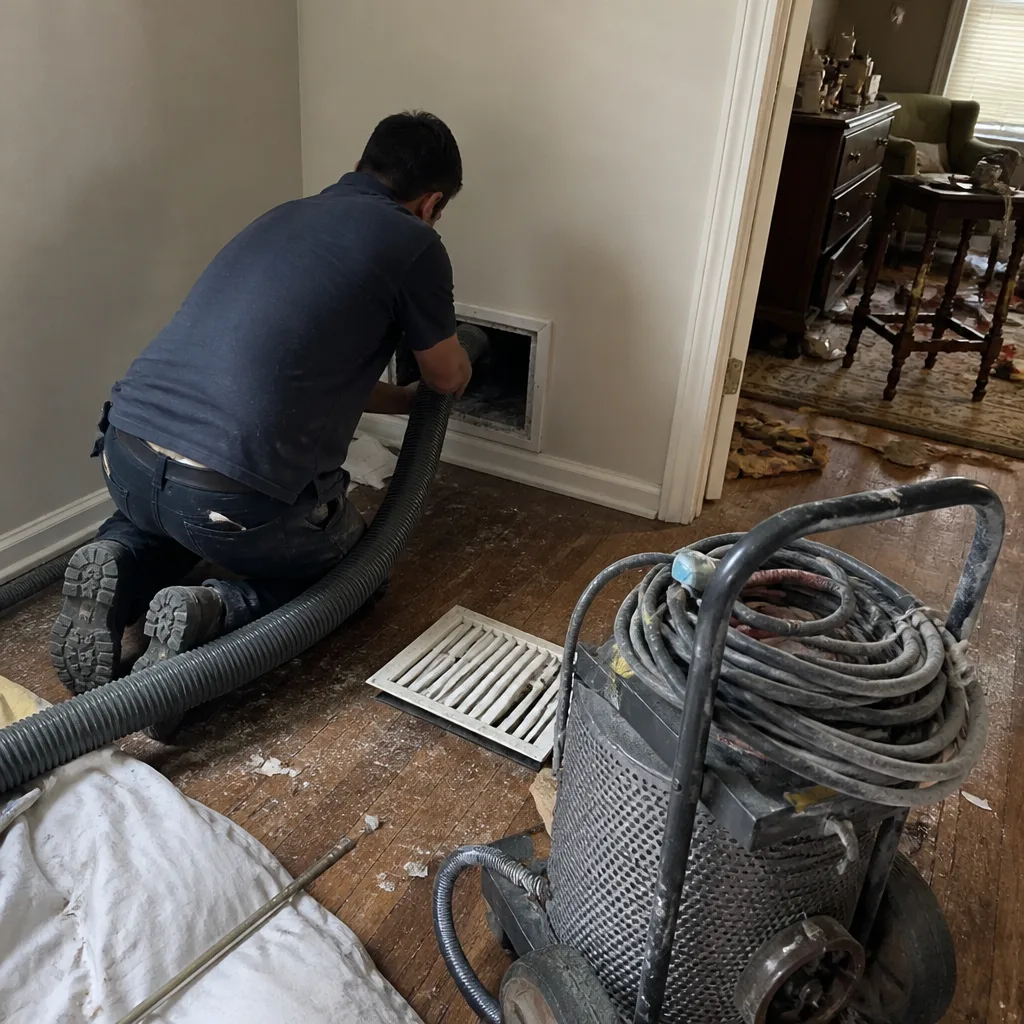 Before
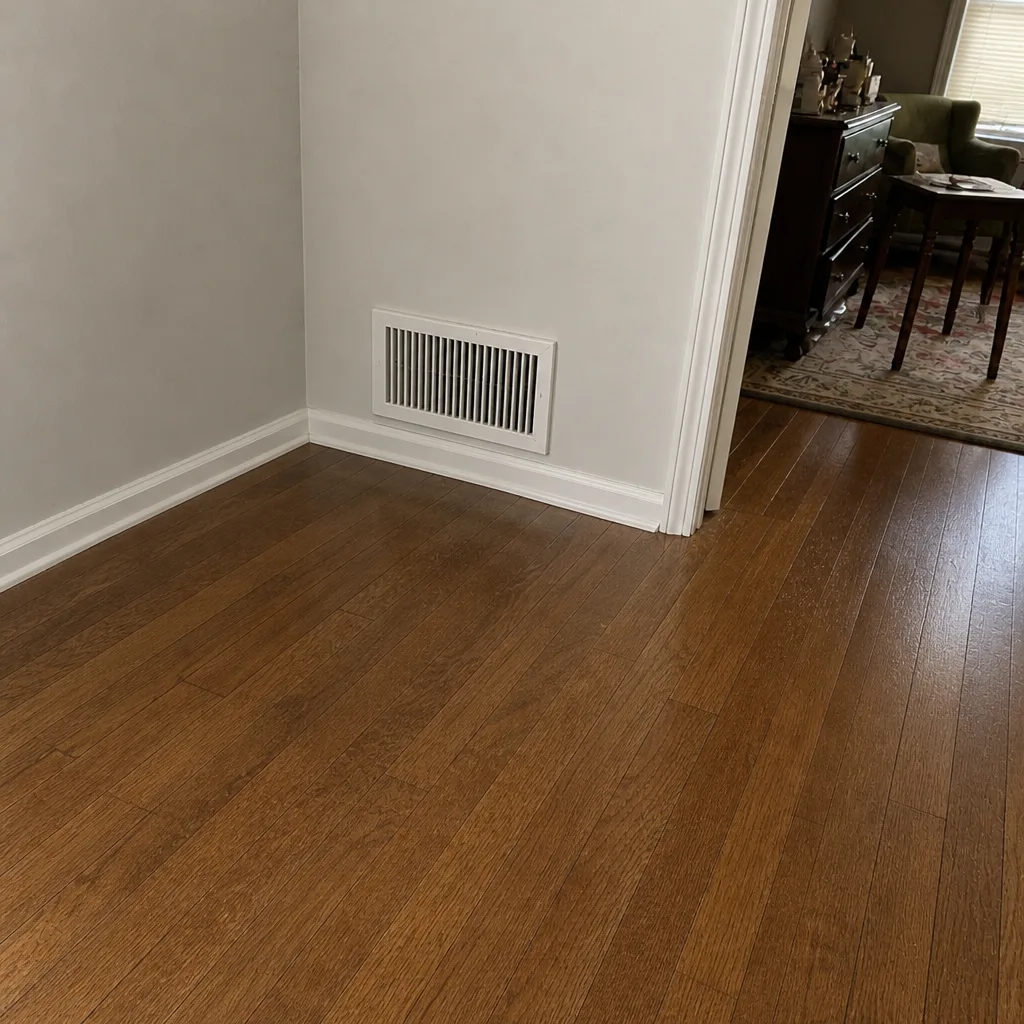 After
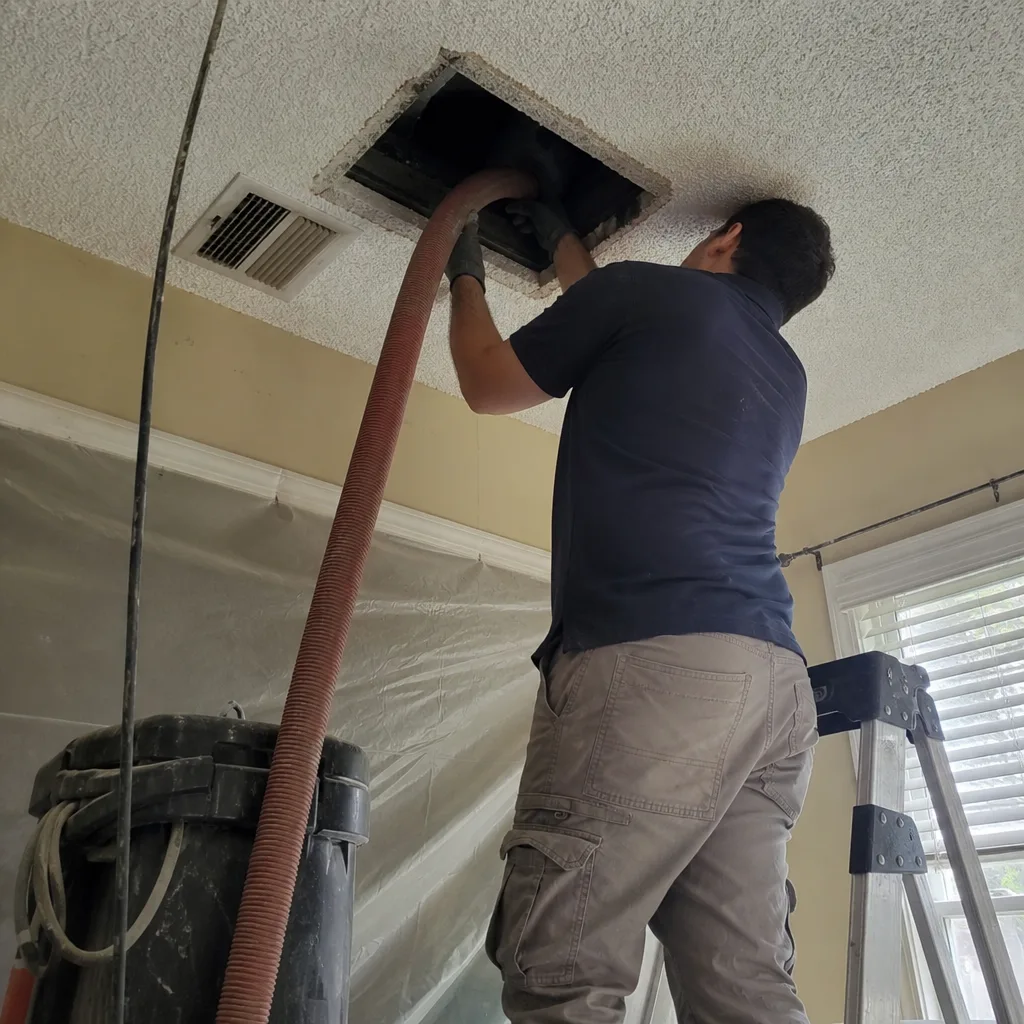 Before
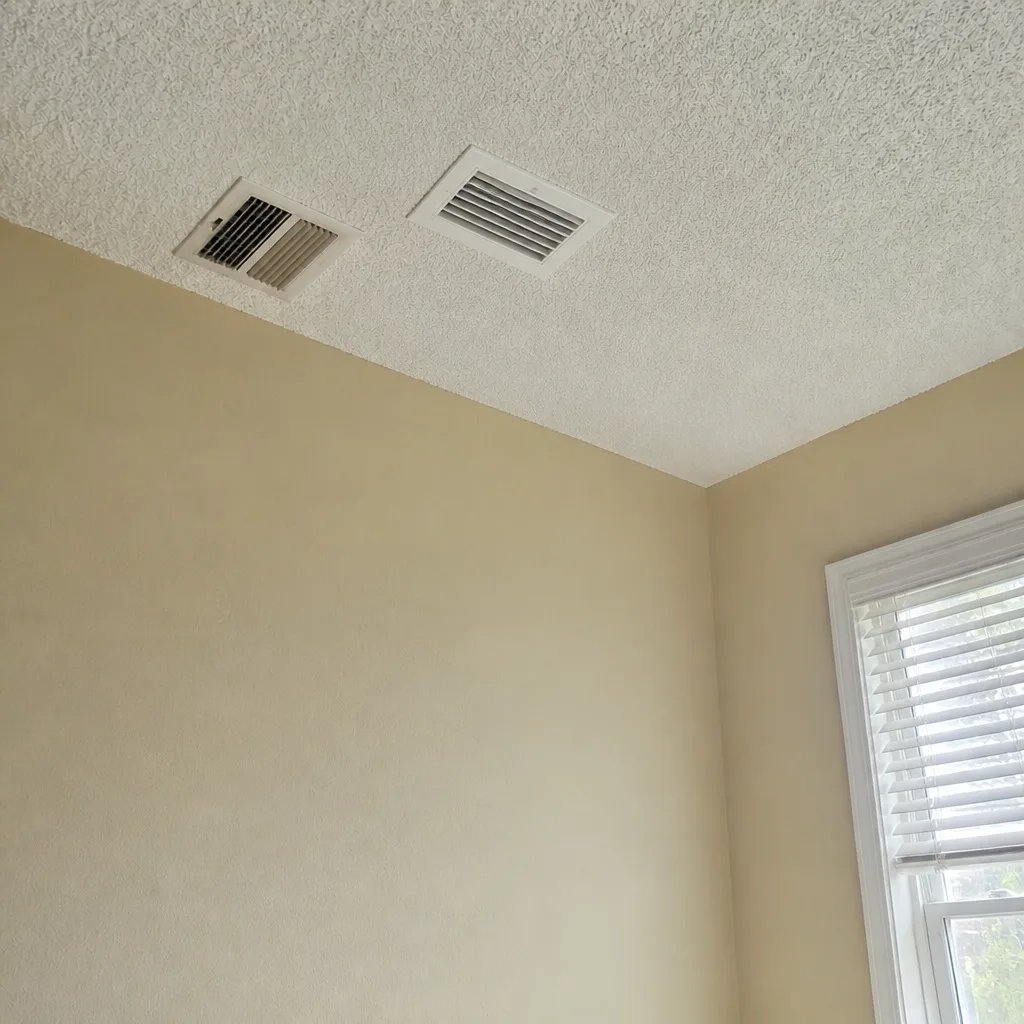 After
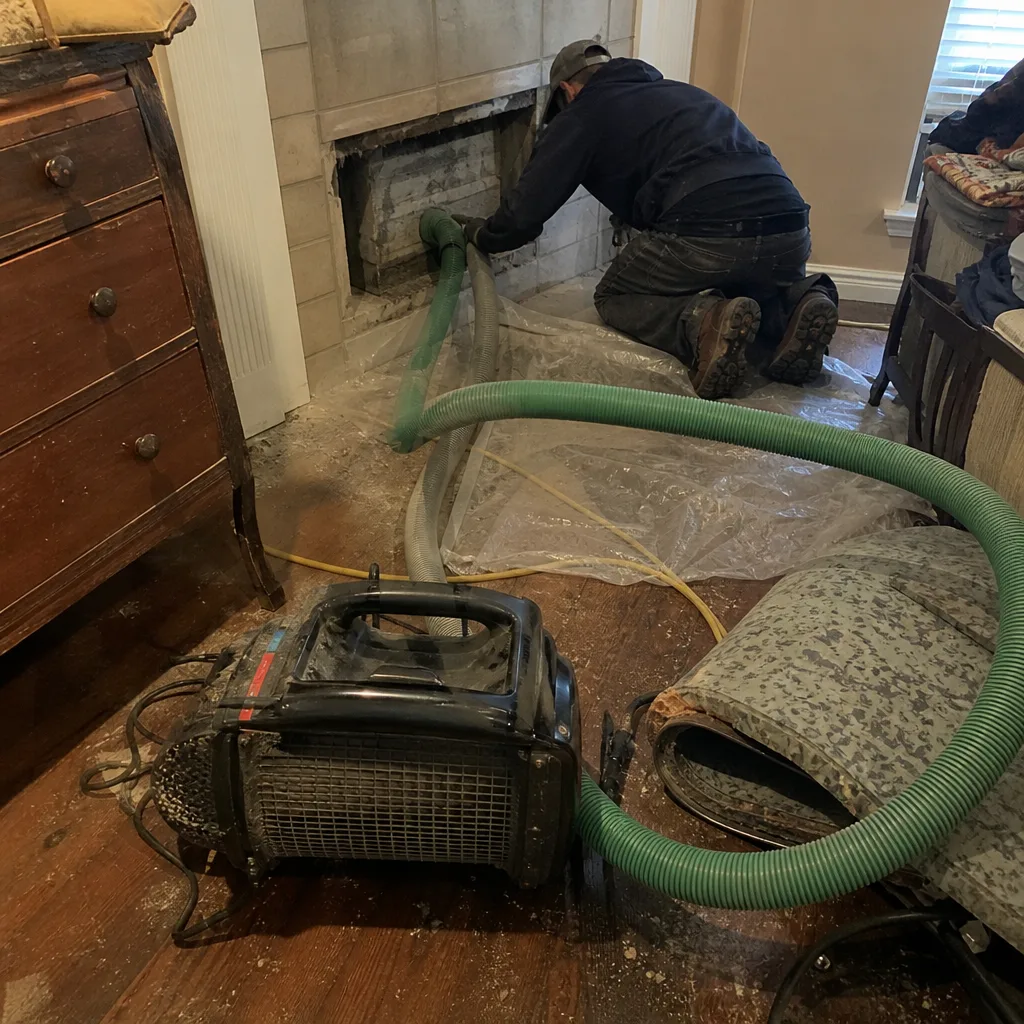 Before
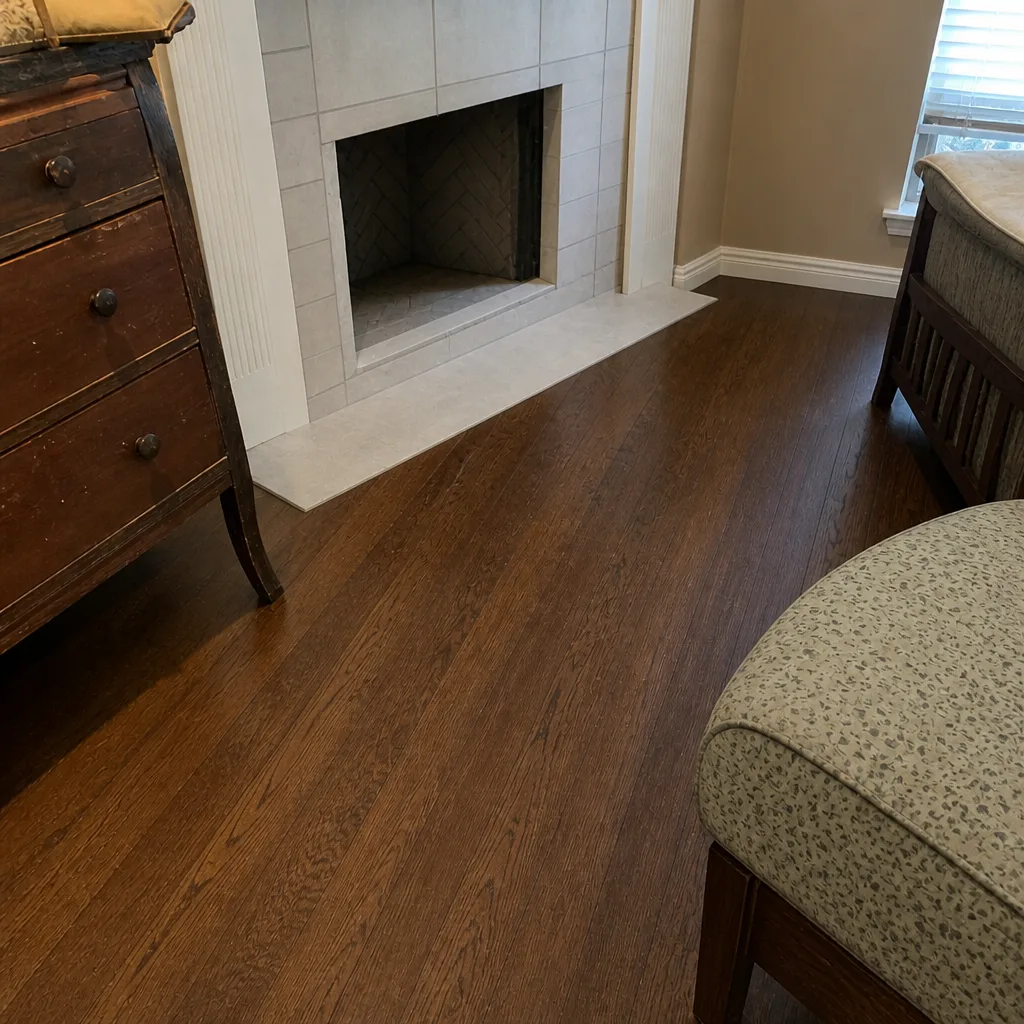 After
When to Call a Professional
Some duct conditions are worth a phone call and some can wait. Call a professional when you see visible debris or microbial growth in the plenum, when the AC startup carries a musty odor, when a recent renovation filled the return with drywall dust, or when the system has accumulated several years of high-runtime service in the North Dallas climate. Call if flex duct is sagging or torn, if the coil face is coated, or if you’ve just bought a house and don’t know what the previous system went through. And call if you can’t find an inspection report from any prior cleaning – that’s a “start fresh” situation, not a “wait and see” one.
Our technicians have up to 10 years of experience, and Air Duct Cleaning North Dallas offers free estimates in North Dallas – call (833) 482-6392. We answer 24/7. Fast dispatch from 7am to 7pm, Sunday through Friday.
Frequently Asked Questions
Air duct cleaning in North Dallas typically runs in the several-hundred-dollar range for a standard single-system home, and the price rises with system size, number of branches, and added scope like HVAC coil cleaning, sanitizing, and sealing. Companies that advertise a very low per-vent or flat coupon price are usually quoting a starting figure that grows once the technician is on site. Ask for a written system-level estimate before work begins. Estimates are free. Call (833) 482-6392 for an exact quote on your system.
In North Dallas, HVAC runtime hours are a better trigger than calendar years. Most homes here run conditioning roughly 2,400 hours a year, so contamination accumulates faster than in cooler climates. A reasonable rule of thumb is to inspect around the 6,000 to 8,000-hour mark and clean on inspection findings, not on a fixed calendar schedule. Homes with pets, allergy sufferers, or recent renovation should inspect sooner.
It can, when the source of the allergen is inside the duct. North Dallas pollen season sends cedar and tree pollen into the return side, and drywall dust from renovation is another common load. Removing that material from the system, cleaning the coil, and sealing leaks addresses the source. A filter upgrade afterward keeps the load down. For allergen-specific concerns, cleaning the system and matching the filtration are the two highest-value steps.
Before-and-after photos of your own plenum, registers, and coil face are how you know. A company that documents the job can show you what was extracted and where it came from. We build that documentation into every job. If a company can’t show you the after photos, you have no verification that the scope was actually performed.
Cheaper quotes usually reflect a cosmetic pass: a portable vacuum on the supply registers with no containment, no plenum cleaning, and no coil work. Contractor-grade extraction takes longer, uses more expensive equipment, and produces documentation. Those costs show up in the estimate. The lower quote isn’t the same job at a better price; it’s a smaller job. Ask each company what’s included and where the debris is captured.
After. Drywall sanding, tile cutting, and cabinet installation all produce fine dust that settles into the return plenum while the AC is running. Cleaning mid-renovation just means more dust will be pulled in the next day. Wait for the work to finish, let the air clear, then book the cleaning. If the renovation involved significant drywall work, that’s the strongest single reason to schedule duct cleaning in North Dallas.
The Bottom Line
Duct contamination in North Dallas isn’t a generic problem, and generic advice doesn’t solve it. Clay dust, cedar pollen, long AC runtime, and new-construction drywall debris combine to make this region’s contamination faster and denser than the national baseline. The fix is a proper extraction with real containment, a coil and plenum cleaning, sealing at the leaks, and filtration that matches the system afterward. The equipment matters – Rotobrush, Nikro, and Abatement Technologies are the standard for a reason. So does the documentation, because before-and-after photos on your own ducts are what turn a service call into a verified result. If you have any doubt about what’s in your system, an inspection is the cheapest way to find out. Air quality starts at the duct, not the air freshener.
Call (833) 482-6392 for a free estimate. We answer 24/7. Fast dispatch from 7am to 7pm, Sunday through Friday. We serve residential and commercial customers across North Dallas with a full system approach – one flat price per system, agreed before work starts, with before-and-after photos of your own ducts at the end.
Written by the team at Air Duct Cleaning North Dallas.