
Last updated November 23, 2026
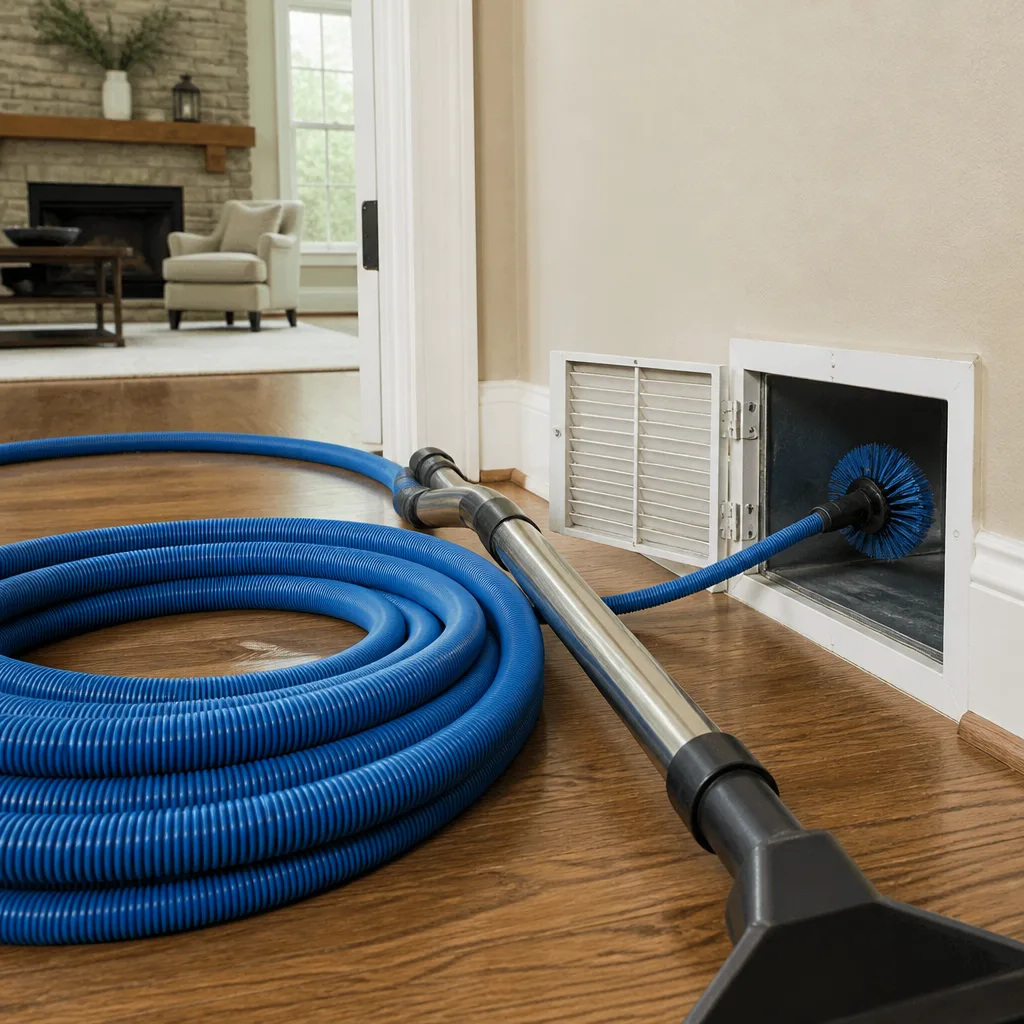 Whole-home duct cleaning
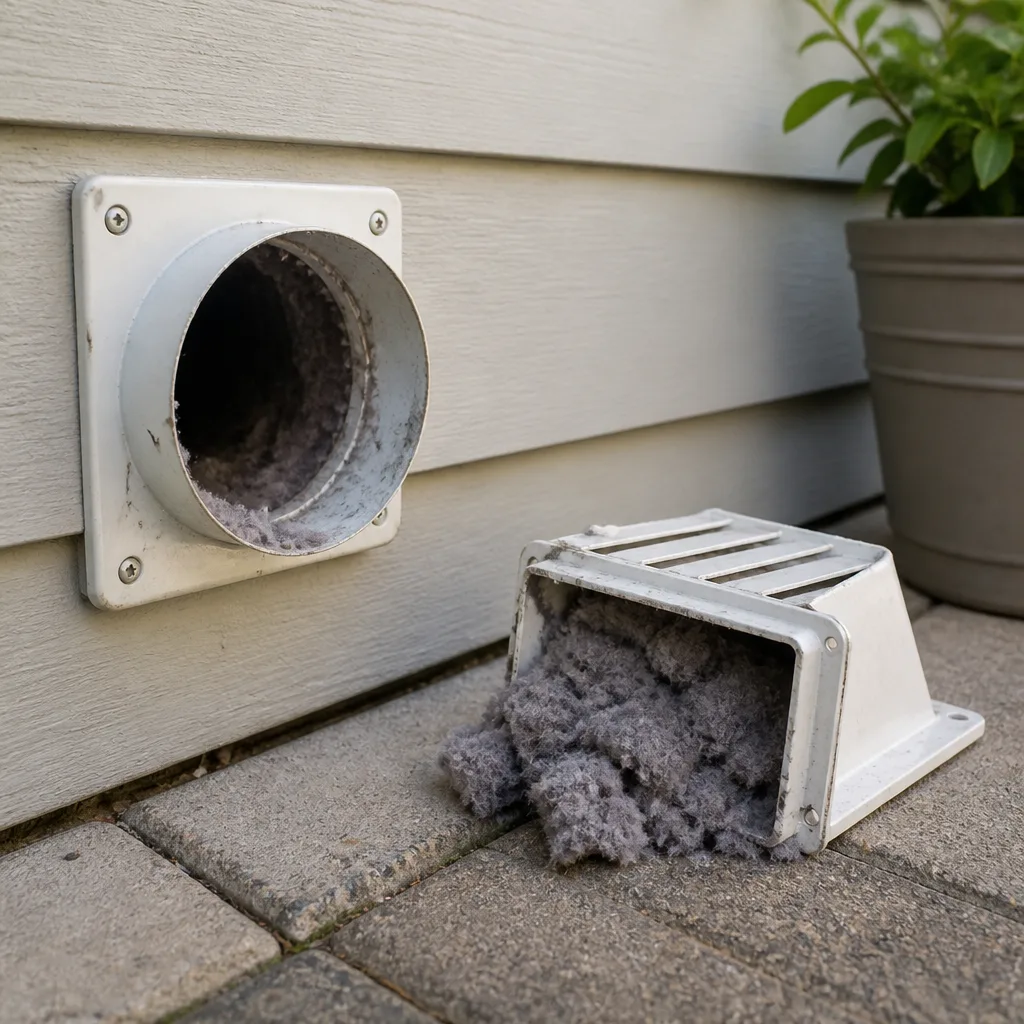 Dryer vent cleaning
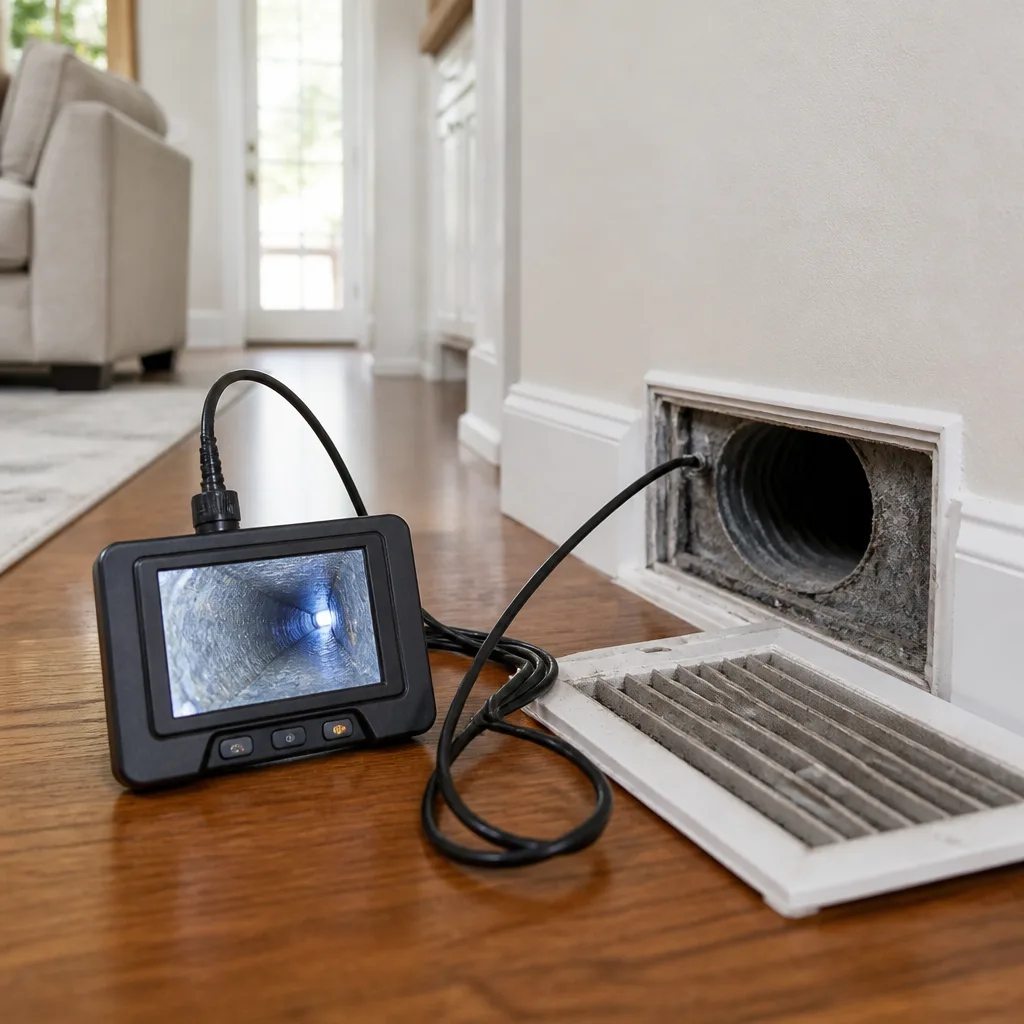 Camera inspection
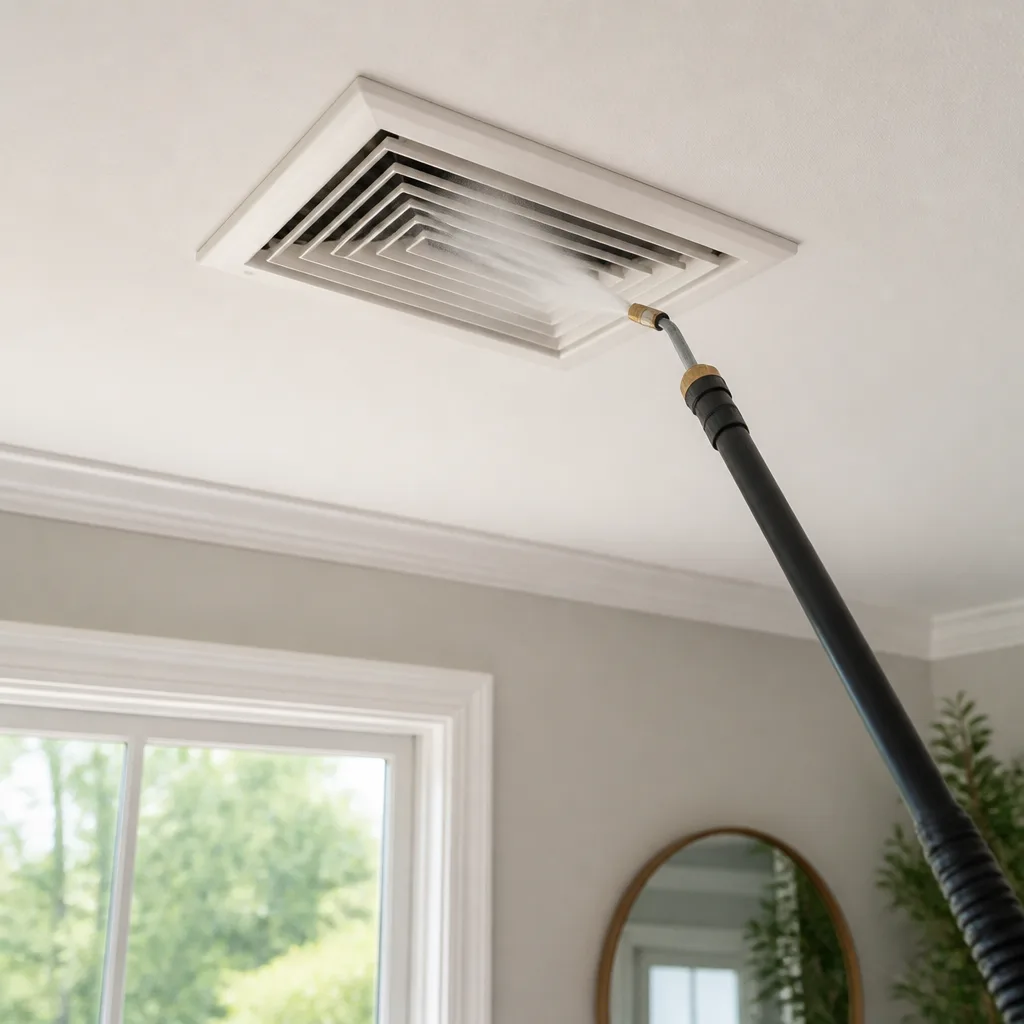 Sanitizing & deodorizing
Whole-system duct and dryer vent check with before-and-after photos - you see exactly what came out of your vents
That "$99 whole-house special" is a bait ad - the real number appears once they are in your hallway, or the "clean" is a shop-vac at the register. We photograph the inside of your ducts before and after instead.
Choosing the Right Air Duct Cleaning Brand: A Buyer’s Guide for North Dallas
Most homeowners in North Dallas pick a duct cleaning company the way they pick a restaurant: whoever surfaces first with the best-looking page. That’s the wrong instinct. Unlike an air conditioner or a furnace, where names like Trane and Carrier actually signal engineering differences you can measure, “brand” in air duct cleaning signals almost nothing. There is no national duct cleaning brand that guarantees an outcome. What determines whether your ducts come out clean is the equipment platform the technician brings to the door, the contact tool they use on each duct type, and the vacuum filtration standard behind it. A franchise with an office and a logo but a portable 1,200 CFM rig will leave more debris behind than an independent in Far North Dallas running a proper contractor setup. This guide is about reading the rig, not the name.
Quick Answer
The best air duct cleaning company in North Dallas isn’t the one with the biggest brand recognition; it’s the one running a truck-mount or contractor-grade vacuum system with HEPA exhaust filtration, a named contact cleaning tool (rotary brush, air whip, or skipper ball), and a willingness to show you documentation of a comparable job. Use a certifying body like NADCA as a minimum bar, not a final answer. Then ask three questions: What’s your truck-mount CFM? Do you do contact cleaning on all supply lines, or only the accessible ones? Can I see post-job photos from a job like mine?
Styles & brands we work with
- Whole-home duct cleaning
- Dryer vent cleaning
- Camera inspection
- Sanitizing & deodorizing
Table of Contents
- What “Brand” Actually Means in Air Duct Cleaning
- How to Evaluate the Equipment Platform
- What NADCA Certification Really Verifies
- Independent vs. Franchise in North Dallas
- How to Read Reviews for Technical Signal
- The Three Questions That Separate Real Contractors
- Why You Want a Company That Covers the Whole Duct Lifecycle
- What North Dallas Homes Actually Face
What “Brand” Actually Means in Air Duct Cleaning
In air conditioning, a brand is a design lineage. Carrier and Trane earn their names through decades of engineering: compressor design, refrigerant efficiency, coil construction. If you buy a Carrier unit and your neighbor buys a Trane, both are genuinely good AC brands and you’re making a reasonable choice either way.
Air duct cleaning doesn’t work like that. No duct cleaning brand designs the physics of airflow. What they sell is a customer experience wrapped around whatever equipment platform their franchise location or operation happens to run. The brand name on the invoice and the quality of the actual cleaning job are effectively uncorrelated.
That matters in a North Dallas market that is saturated with franchise offices, door-to-door coupon operations, and independents running serious equipment. If you’re searching for the Air Duct Cleaning North Dallas option you can trust, the only real signal is what the company brings into your home and what it can show you afterward.
The three things a real duct cleaning “brand” is made of
- The vacuum platform – truck-mount or high-CFM portable unit, ideally with HEPA exhaust filtration.
- The contact cleaning method – rotary brush, air whip, or skipper ball, matched to the duct type rather than one tool for everything.
- The documentation standard – before-and-after photos, written scope, and post-job accountability.
Those three elements are what you’re actually comparing when you compare two quotes. Everything else is packaging.
Why this matters more in North Dallas than people realize
North Dallas homes tend to be tightly built with limited attic space and long horizontal attic runs. When ducts run a long horizontal span through a hot attic, you get more fine dust migration than in a simple short-run layout. A low-capacity portable unit can’t move enough air to overcome the friction load on those long runs. A higher-CFM truck-mount rig can. When a homeowner in Preston Hollow says, “they cleaned it and I still see dust,” the honest answer is usually that the equipment was wrong for the duct design. That happens because the company chose the right brand for their marketing, not the right tool for the layout.
How to Evaluate the Equipment Platform
This is the section that separates the buyer’s guide from the sales page. When a technician arrives, look at what’s on the truck or in the van. Then ask what the duct cleaning system is actually doing. Here’s what each element means.
Truck-mount vs. portable units
A truck-mount air duct cleaning system typically runs in the range of 3,000 to 5,000 CFM, sometimes higher, with a large cyclone or HEPA filter array on the exhaust side. Portable units range from roughly 800 to 1,500 CFM. In practical terms, a portable unit can pull loose debris out of a short flexible duct run but will struggle to create enough negative pressure in a house with long attic runs and multiple trunk lines.
Truck-mount doesn’t automatically mean better. A 5,000 CFM truck-mount with a cheap dump filter still vents fine dust into the attic or the yard. The combination of truck-mount capacity and HEPA exhaust filtration is the benchmark to ask for. In our experience, that’s where a lot of the “brand” difference in North Dallas actually lives – independent operators may run a better rig than a national name that reequips each location differently.
Contact tools: brush, whip, and skipper
An air vacuum alone only removes what it can lift without scrubbing. Contact cleaning tools physically dislodge the material stuck to duct walls. An approximate rule of thumb in the trade:
- Rotary brush – best for rigid sheet metal trunk and supply lines. The rotating head scrubs the duct wall.
- Air whip – a flexible line with forward and rearward jets, usually best on flexible ducts and transitions.
- Skipper ball – a compact forward-and-reverse jet head, useful on short or complex runs where a brush can’t safely rotate.
A company that runs a brush on every duct regardless of type is cutting corners. A company that uses different tools per duct type is doing the job right. When you hear “Rotobrush,” “Nikro,” or similar names from a contractor, that’s a credentialed signal they know which tool belongs where.
HEPA and negative-pressure equipment
Ask about the exhaust side of the vacuum. True containment means the vacuum isn’t dumping the fine particulate back into your living space or attic. That’s where HVAC cleaning crosses over with duct cleaning: the equipment category used for one is useful for the other. Contractors using Abatement Technologies air filtration and negative-pressure tools are applying the same category of containment equipment used in mold and asbestos abatement work. It’s a legitimate technical differentiator, not a marketing talking point. You can ask to see the label on the filter housing if you want to confirm.
What NADCA Certification Really Verifies
NADCA, the National Air Duct Cleaners Association, publishes the industry’s assessment, cleaning, and restoration standard. A company that holds NADCA membership has agreed that a certain baseline of method has been followed – the ASHRAE-referenced approach to source removal, the use of tools matched to the duct type, and at least a stated expectation of cleaning documentation. That’s good.
What NADCA certification does not verify, at the company level, is:
- The actual CFM capacity of the equipment the company deploys on any given call.
- Whether every technician on the crew runs the same tools, or whether only the owner knows how to use a brush correctly.
- The exhaust-side filtration standard.
- The documentation quality delivered to the homeowner.
- Whether the “the company” in the yellow pages is actually the company that shows up.
So use NADCA as a minimum bar, not a final criterion. If a company in North Dallas is a NADCA member, good – you’ve cleared a baseline. Now ask the questions in the “Three Questions” section later in this guide. A NADCA badge alone doesn’t tell you whether the crew shows up with a 1,200 CFM portable or a proper truck-mount.
The same logic applies if you’re shopping in Plano or Richardson and using this guide to filter companies. NADCA is a starting filter. It’s not a finish line.
Independent vs. Franchise in North Dallas
The independent vs. national franchise question in air duct cleaning works differently than in HVAC. In HVAC, both independents and franchises can order the same Carrier or Trane equipment from the same distributor, so the difference is mostly service quality and pricing. In duct cleaning, equipment standards vary widely by location within the same franchise, because each location makes independent capital decisions about what rig to run.
That creates a real trade-off in North Dallas. Here’s the honest breakdown:
Where national franchises win
- Accountability structures – centralized complaints, brand standards for customer communication, and a corporate-level quality process to escalate to if something goes wrong.
- Documentation templates – some franchise networks have standardized before-and-after documentation you can request.
- Consistent pricing disclosure – some networks quote more predictably than independents.
Where independents win in North Dallas
- Equipment continuity – the independent has fewer franchise royalties eating into their equipment budget. That often translates to a better vacuum rig for the same or lower price.
- Same crew, every job – you meet the technician who does the work, not a rotating roster of subcontracted labor.
- Local knowledge – a company that works in Richardson, Plano, Carrollton, and Richardson-adjacent North Dallas can tell you which duct designs are common in each.
The real move: ignore the name on the truck’s logo and ask the equipment and documentation questions. Both franchises and independents can fail or pass those questions. North Dallas has strong examples of both directions. What you want is a company that is trying to run contractor-grade equipment on a residential budget, and that’s honestly a category where the right independent company often has a structural advantage.
If you’re not sure whether a company is running the right equipment, ask to see one of their air duct cleaning service pages and match the equipment names to what we describe in this guide.
How to Read Reviews for Technical Signal
Most homeowners read reviews for satisfaction signals: star counts, “friendly staff,” “on time.” That’s weak evidence. The reviews that tell you whether a company is technically competent are the ones that mention specifics.
High-value review signals
- Specific equipment – “they brought a truck with a Rotobrush” or “used a Nikro rig” tells you the reviewer actually watched the job.
- Before-and-after documentation – a review that mentions photos of their own ducts means the company follows through.
- Technician explanation – a review that says the tech explained the duct layout and what they found means the company trains its crew to communicate, which usually correlates with technical seriousness.
- Repeat customers – a review that mentions using the same company for a second property or after a renovation is stronger than a first-time five-star rating.
Low-value review signals
- Star counts alone.
- Reviews that talk only about price.
- Reviews that praise the office staff without any mention of the job itself.
- Generic reviews that could have been written about any service company.
In North Dallas, where the market is crowded, we’ve noticed that the technically strong reviews often cluster around properties in older neighborhoods like University Park and Highland Park, where duct systems are older and homeowners are more likely to ask equipment questions during the visit. Look for that kind of review – specific, property-aware, and actual-information-rich. It’s the closest thing you have to a field report without asking for one yourself.
The Three Questions That Separate Real Contractors
You don’t need to become a duct cleaning expert to filter out a marketing-first operation. You need three questions, asked word for word. Either they can answer them cleanly, or they can’t.
Question 1: “What’s your truck-mount CFM?”
This asks them whether the vacuum system is a truck-mount rig or a portable unit, and what airflow it delivers. Good answers are specific: “we run a truck-mount at around 4,500 CFM” or “we use a Nikro system with a 4,000 CFM rating.” Bad answers are vague: “our system is very powerful” or “it’s state-of-the-art.” If the answer is “we use a portable unit,” ask what capacity and whether it’s HEPA-filtered. That’s not necessarily a dealbreaker for a small apartment, but for a North Dallas single-family home it’s worth knowing.
Question 2: “Do you perform contact cleaning on all supply lines or only the accessible ones?”
This is the question that catches the practice of “skip the runs we can’t reach easily.” Every company cleans accessible runs. The real question is whether they’re doing contact cleaning – rotary brush, whip, or skipper – on the trunk and every supply line they can safely reach, and whether they disclose the ones they can’t. A good answer distinguishes: “we do contact cleaning on all accessible supply lines; here’s what we’d need to skip and why.” A bad answer: “we get everything.”
Question 3: “Can I see post-job documentation from a comparable job?”
Before-and-after photos of a home with a similar duct layout and size. A written scope of work. These are the artifacts of a real operation. If they can’t produce them on a spot visit, they shouldn’t get your business. If they can, you’ve seen the standard of accountability you’ll get.
Run those three questions on any company you’re considering in North Dallas. Whichever ones pass on all three at reasonable, honest rates – that’s your shortlist. That filter works just as well for dryer vent cleaning as it does for duct cleaning, by the way, because it’s testing for equipment seriousness, not for sales charm.
Why You Want a Company That Covers the Whole Duct Lifecycle
Cleaning exposes problems. That’s the part most companies don’t tell you. When you run a rotary brush through a duct system, you’ll sometimes find:
- Loose joints or poorly taped connections that leak air.
- Collapsed or crushed flex duct in the attic.
- Sanitizing needs after a musty smell was liberated by the cleaning.
If the company that does your cleaning only cleans ducts, they’ll hand you a list of problems and tell you to call a different contractor. That’s a second call, a second estimate, and a second chance for the details to get lost. A company that does cleaning, sanitizing, repair, and sealing can address what cleaning exposes without handing you off. That’s not a sales pitch; that’s a workflow improvement that reduces your odds of being sold a fix that doesn’t address the actual root cause.
Dryer vent cleaning deserves its own line item in this discussion, not a footnote. A clogged dryer vent is a fire pathway, not a maintenance afterthought. A bare minimum duct cleaning operation treats dryer vent cleaning as a courtesy add-on after the duct job. A contractor-grade operation treats it as its own service with its own equipment and its own risk profile. Ask the same three questions about dryer vent cleaning that you ask about ducts: what equipment, what airflow, what documentation.
What “lifecycle” should look like when you ask
- Clean – contact cleaning with rotary brush, whip, or skipper, matched to every duct type they reach.
- Sanitize – a documented sanitizing step after cleaning, using a finishing product with a safety data sheet available on request.
- Repair – sealed or reconnected duct runs where cleaning exposed a leak.
- Seal – mastic or tape rated for HVAC use on joints and transitions.
- Upgrade – whole-home filtration options with a trusted product line, if indoor air quality needs it.
Only companies that actually operate across that full list are worth the phone call. If a company does only cleaning, that’s a fine service, but understand that they will hand off the rest.
What North Dallas Homes Actually Face
Air duct cleaning context is different in North Dallas than in a coastal or mountain market. Winters are mild. That’s important because it changes what’s driving contaminant buildup. In colder climates, homes run heat for many months and duct systems get blasted with warm dry air, which is a different load profile. In North Dallas, cooling season dominates, and the duct system is mostly handling cool, high-humidity air with long runtimes. That means:
- More condensate-related microbial growth in the evaporator coil and the first few feet of the supply plenum.
- More dust migration through attic runs because long horizontal runs in a hot attic create fine-particle movement even when the system is cycled.
- More visible dust in the living room in older homes in University Park, Highland Park, and the older sections of North Dallas, where duct systems and attic layouts drive airflow dynamics more than newer construction does.
If a company’s marketing sounds the same as it would in Ohio – “winter freeze damage” or “heat season” language – they may be a national marketing template, not a North Dallas specialist. Ask about cooling-season dust, attic-run design, and evaporator coil contamination instead, and see how they respond.
We serve homeowners and property managers across North Dallas, Richardson, Plano, Carrollton, and the surrounding neighborhoods. If your property is in one of those areas and you’re not sure which service tier fits, that’s a good conversation to have before scheduling.
Common Mistakes to Avoid
- Picking on price alone. In North Dallas, the coupon quote is almost always a loss-leader. A sub-$100 “whole house special” might get you a light air whip down two runs. Add-ons and upsells at the door are how they make money. Ask what a real whole-system cleaning looks like on a comparable property, and expect that number to be honest.
- Assuming a national name means a national standard. A franchise in North Dallas may run a proper truck-mount rig; a franchise in a different neighborhood may run portable units. Check the local operation, not the network head office.
- Not asking for documentation. Before-and-after photos of your own ducts are the only way to know the work happened. If a company can’t produce them, you’ve learned something critical before the work starts.
- Treating NADCA as the finish line. It’s a minimum bar. A NADCA member can still run a portable unit on a house that needs a truck-mount.
- Ignoring the dryer vent. In older North Dallas homes, dryer vent runs can be long and lint-clogged. A clogged dryer vent is a fire risk; it’s not “just lint.” Include it in the same visit and ask what equipment is used on it.
- Cleaning without sealing. A duct system that gets cleaned but not sealed will re-dirty faster. If a company’s cleaning scope doesn’t include sealing joints that leak, you’ll be back at the same problem in a couple of years.
- Skipping the review smell test. Star counts are weak; specific equipment or documentation detail in reviews tells you whether the reviewer actually watched the job. Filter North Dallas reviews on specificity, not volume.
See the difference
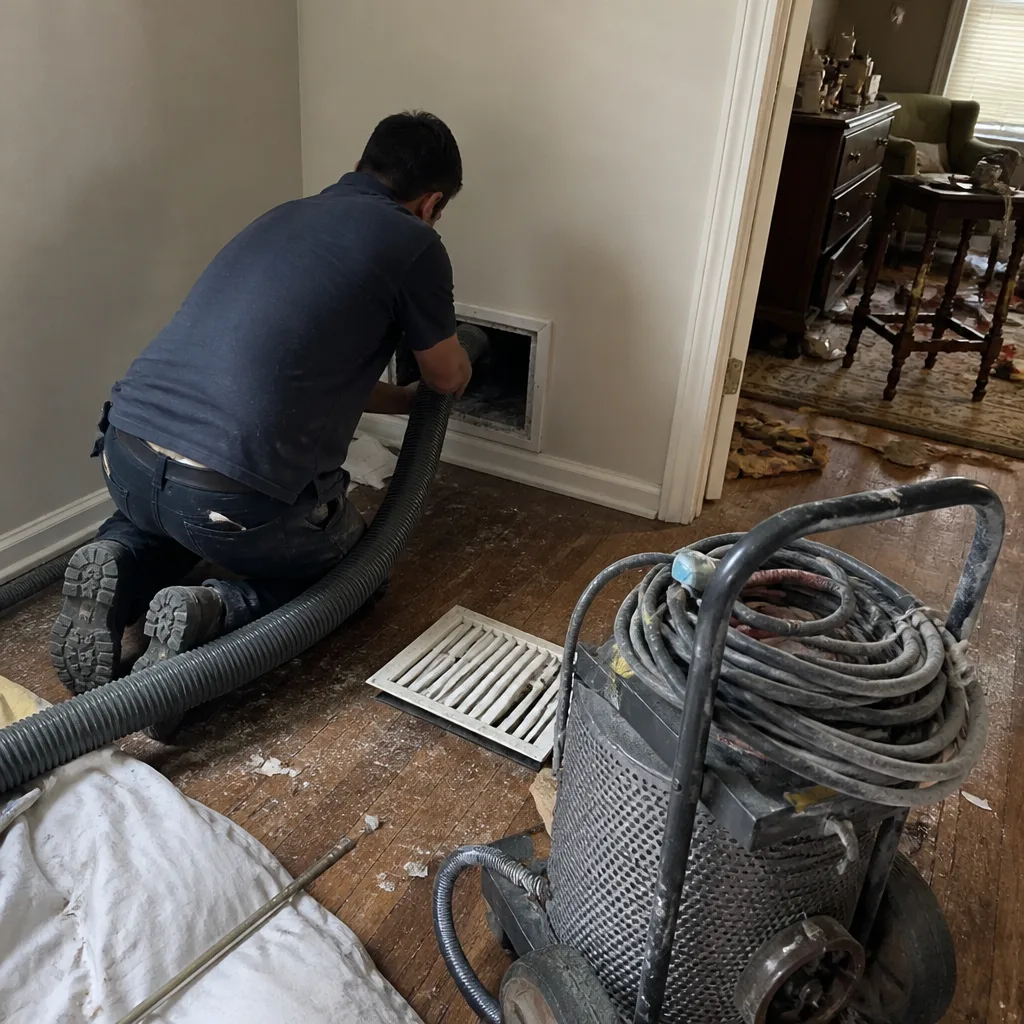 Before
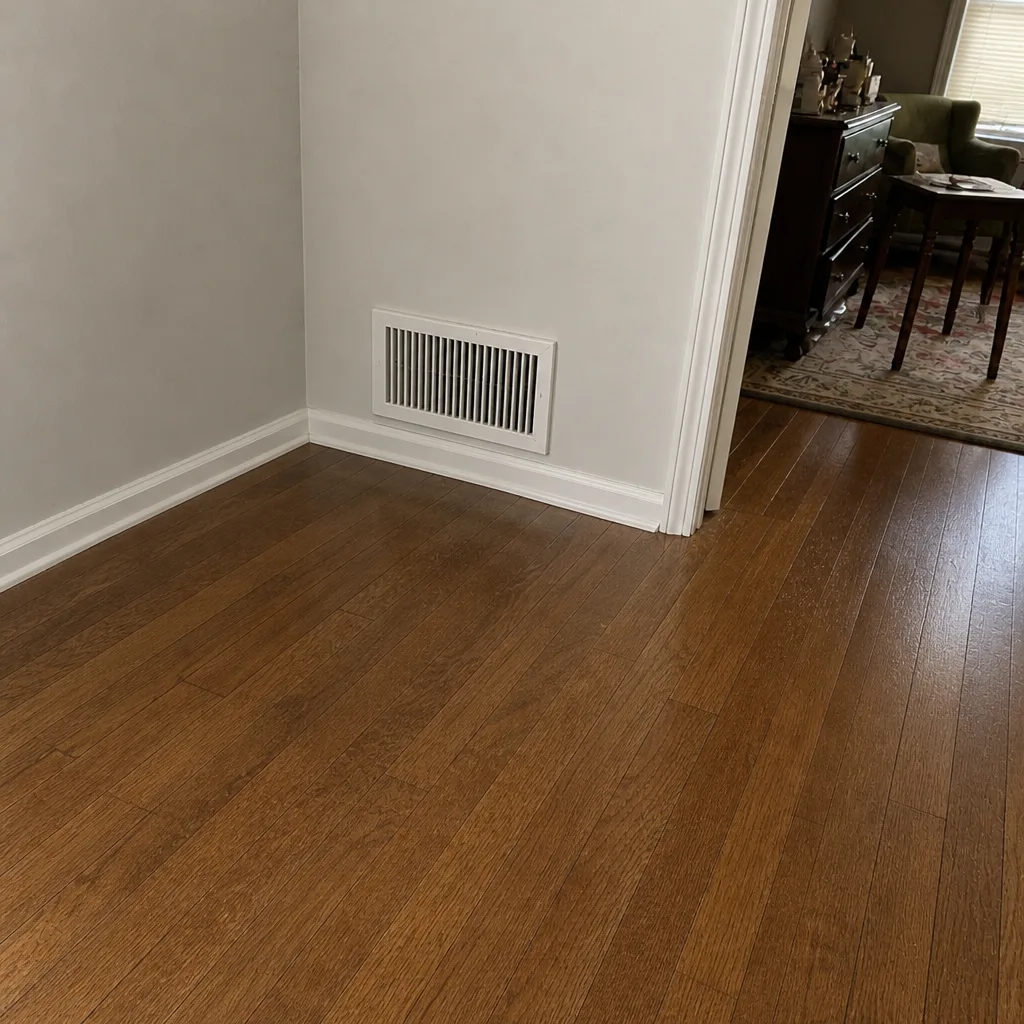 After
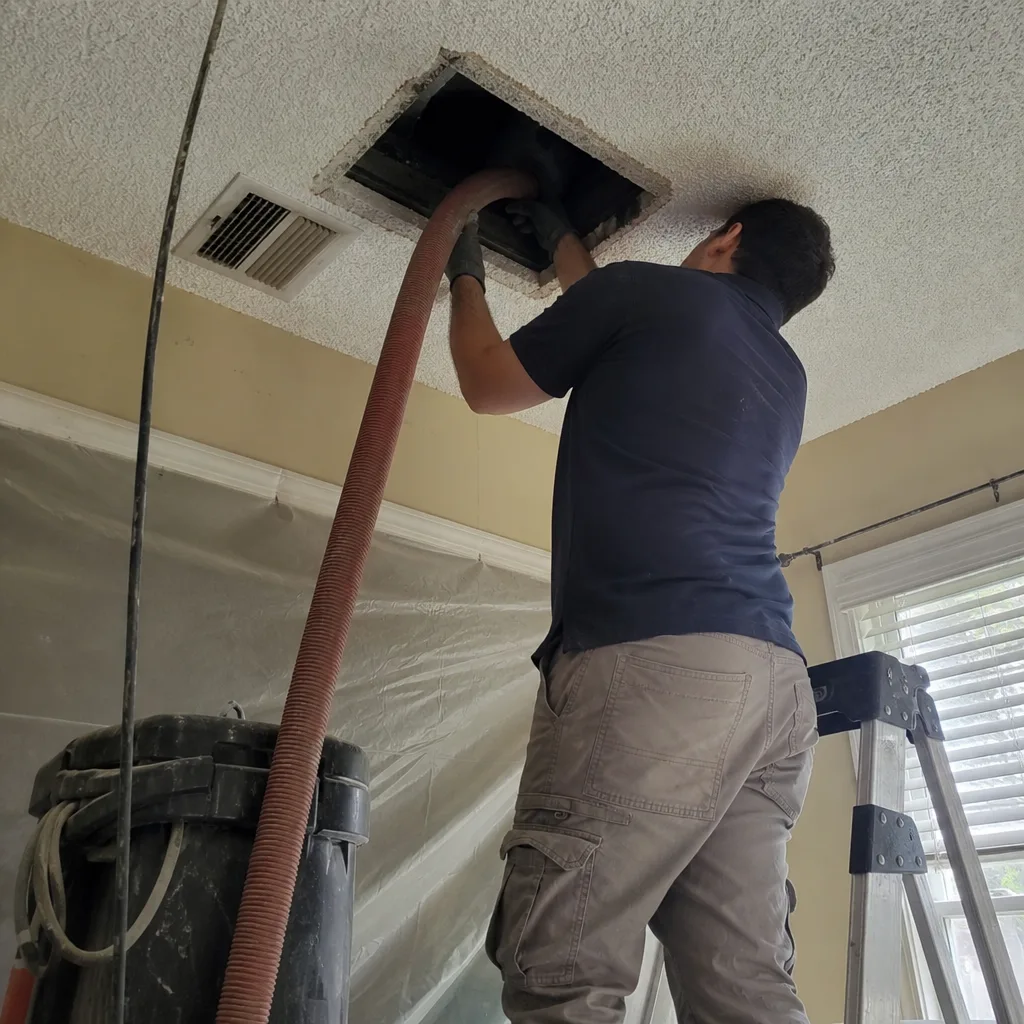 Before
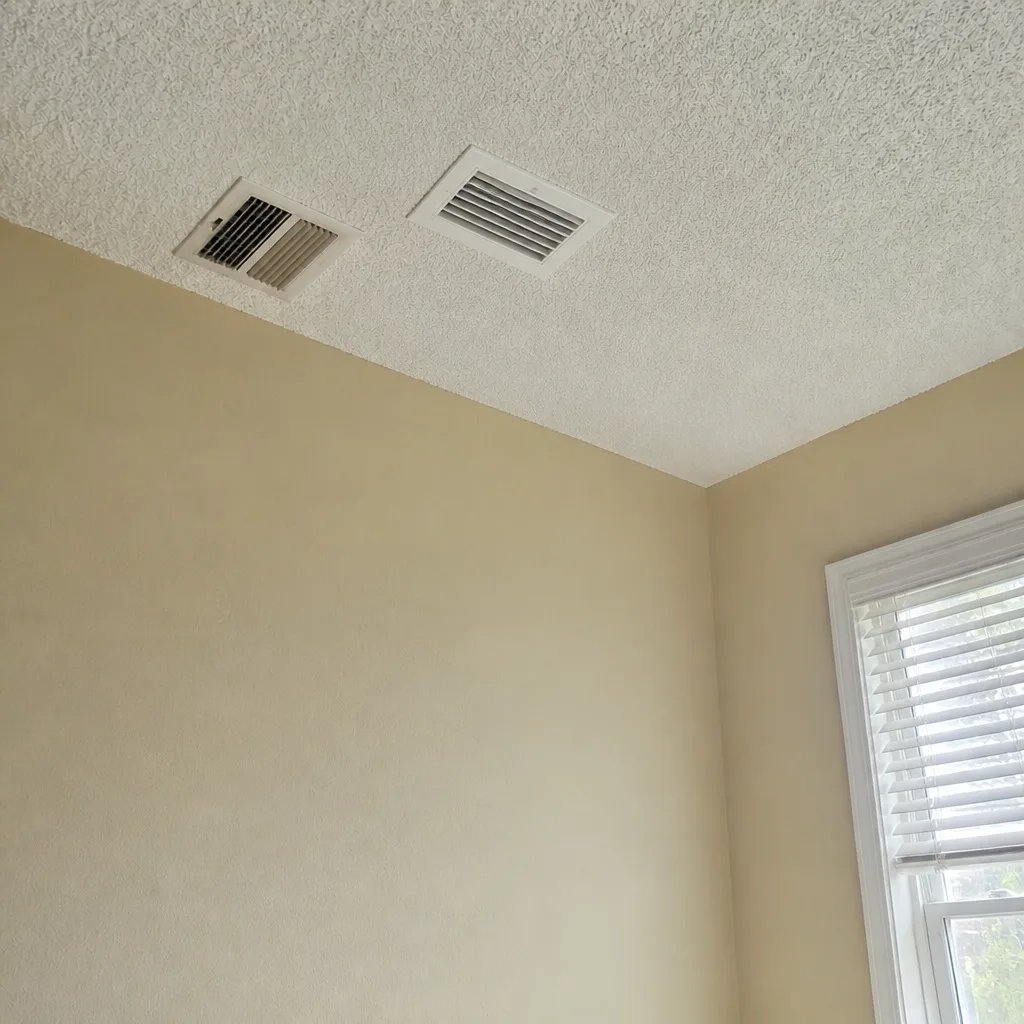 After
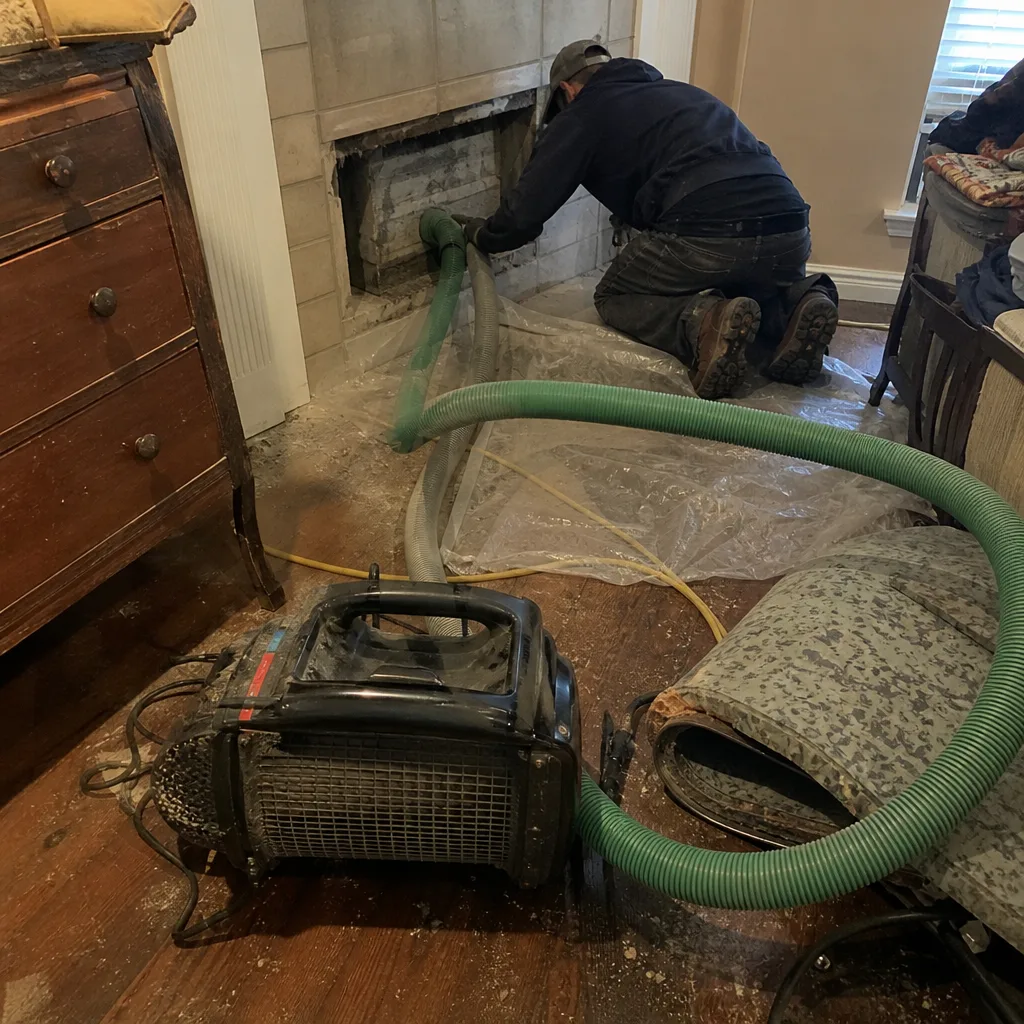 Before
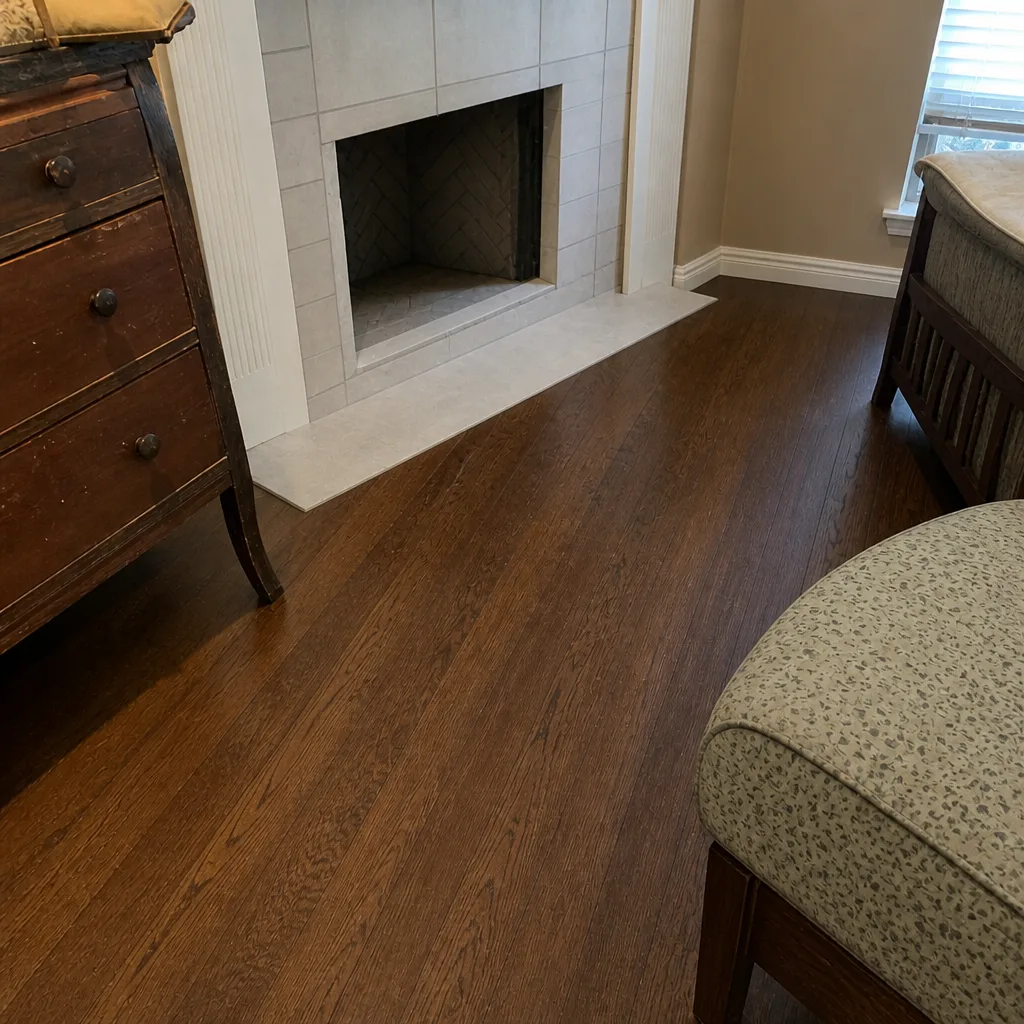 After
When to Call a Professional
There are scenarios where you shouldn’t try to sort out air quality on your own – and in those cases, calling a contractor-grade duct cleaning operation is the correct next step. If you’re seeing chronic allergy flare-ups or musty smells that don’t clear up after normal dust control, that’s a source-removal problem. If your home was just renovated, drywall dust has almost certainly been pulled into the return system and needs professional containment, not a shop vac. If a family member is asthmatic or immunocompromised, the standard for containment is higher. If you can see visible dust or debris buildup inside a supply grille, that’s worth an inspection. Dryer vents, if you can’t remember the last time they were cleaned and your dryer runs hotter than it used to, get them checked. Air Duct Cleaning North Dallas offers free estimates in North Dallas – call (833) 482-6392. We answer 24/7. Fast dispatch from 7am to 7pm, Sunday through Friday.
Frequently Asked Questions
A typical whole-system air duct cleaning in North Dallas depends on the number of supply lines, duct material, and whether sanitizing or sealing is included. The range varies with the property; the written estimate sets the final price, and there’s no per-vent pricing in a proper contractor quote. Call (833) 482-6392 for an exact quote – estimates are free.
Cheap quotes usually mean a smaller vacuum system, fewer contact tools, or a scope that covers only a fraction of the runs. The equipment platform behind the quote is what changes the real price. If a company’s quote for a North Dallas property looks like a fraction of everyone else’s, ask what CFM their truck-mount or portable unit runs and what contact tool they use on each duct type. Call (833) 482-6392 for an honest, equipment-matched quote.
Ask for before-and-after photos of your own ducts and a written scope of the work performed. Any company that can’t produce documentation of your specific job is a signal, not a guarantee. We document each North Dallas job we do, and we’ll show you the standard before we schedule. Call (833) 482-6392 to discuss what documentation is provided on a job like yours.
No. NADCA certification is a useful baseline, but it doesn’t tell you whether the crew that shows up is running a truck-mount or a portable unit, or whether they run contact cleaning tools on every reachable line. Use it as a minimum bar and then ask the three equipment questions. Call (833) 482-6392 if you want to talk through the questions with us before you shortlist anyone.
Most North Dallas homes do well with duct cleaning every three to five years, unless something changes the load: a renovation, a new pet, mold exposure, or visible dust coming out of the vents. A home with an evaporator coil that isn’t maintained will need it more often. Once you’ve had one documented cleaning, use the photos as the baseline for deciding when the next one is due. Call (833) 482-6392 to talk through what your property actually needs.
No. Dryer vent cleaning is its own service with its own equipment and risk profile. A clogged dryer vent is a fire pathway, and it needs the same contact cleaning and containment standard as the duct job. We treat it as a dedicated service, not a courtesy add-on. Call (833) 482-6392 to schedule dryer vent cleaning or discuss it alongside a full duct job.
The Bottom Line
The “best” air duct cleaning company in North Dallas is the one you can interrogate on equipment and documentation, not the one whose logo you recognize. Ask about truck-mount CFM, HEPA exhaust filtration, and contact cleaning across every reachable duct type. Use NADCA as a floor, not a ceiling. Read reviews for equipment and documentation specifics, not star count. And pick a company that handles the whole lifecycle – clean, sanitize, repair, seal – so you don’t have to hire a second contractor when the first one uncovers a problem. That’s the filter. Everything else is brand packaging.
If you want to skip the shopping-around process, we’re the North Dallas air duct cleaning team that runs contractor-grade equipment and documents every job. Call (833) 482-6392 for a free estimate. We answer 24/7. Fast dispatch from 7am to 7pm, Sunday through Friday.
Written by the team at Air Duct Cleaning North Dallas.